How a 19-Person Arizona Water Department Got Its Lead Service Line Inventory Off Paper
LSL Inventory
LSL Verification
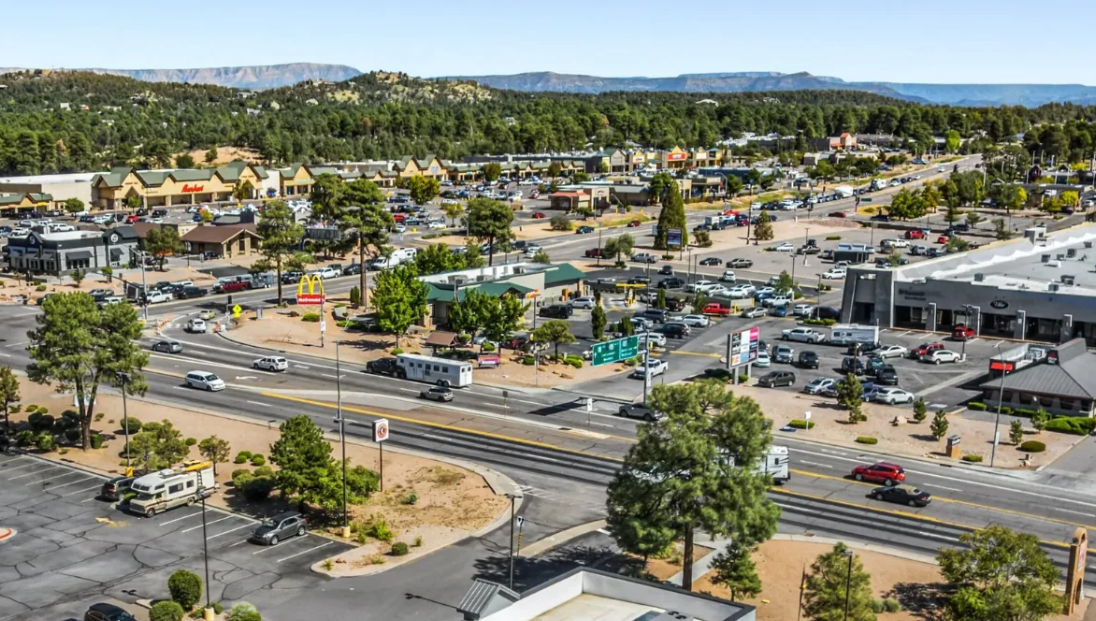
Payson’s water department started with service line records that weren’t even in spreadsheets and, with 120Water and a field contractor working in the same platform, is now fully non-lead.
The Challenge
The Town of Payson sits at about 5,000 feet in Arizona’s pine country, and its water department runs with 25 people. Manar Bogatko, the department’s Senior Water Quality Specialist, handles its water sampling and reporting across 35 active wells, 25 active entry points to the distribution system, a surface water treatment plant, and a Water Quality Assurance Revolving Fund (WQARF) site the town has helped sample and maintain for about thirty years. In her view, that makes Payson’s system more complex than those of many bigger cities.
When new federal lead service line requirements arrived, alongside new PFAS rules, compliance and the treatment plant rested on two people: Manar and the water quality and treatment manager. The department’s infrastructure side was one other person.
As Manar recalls, the service line records weren’t even in spreadsheets. Information lived in the billing system, which held some dates on homes, and in as-built plans and permits kept by the community development department, which had only held onto some of them. Building the inventory meant pulling paper and, when the department had a summer intern, pointing them to where to look.
Staff memory couldn’t fill the gaps. Payson’s distribution supervisor has been with the department for 38 years, but Arizona required a paper trail for every verification and wouldn’t accept staff knowledge, even when the town asked whether a notarized statement would do. The town looked into state grants to cover the data entry, but nothing came through, and the work was pushed off until it had to start.
“There’s only so much I can do and manage with all of my other job tasks that I have. I said, we need help.” — Manar Bogatko, Town of Payson
The Approach
Manar had first come across 120Water at a conference, and it was the only provider she knew of. It also helped that the Arizona Department of Environmental Quality (ADEQ) had already selected 120Water for water systems’ inventory submissions, so using the same company for the inventory work kept things in what she calls an even flow. The cost fit the budget, and the department explained to the town council that Manar couldn’t get all of the information into the system by herself.
From there, 120Water did most of the legwork. Manar handed over the data she had, sending files over as she went, and 120Water’s team organized it and imported it into the platform. “Me giving them a spreadsheet that’s not organized in any way,” she said, “and they’re able to organize it and categorize it and just get it in there.”
That made the 2024 inventory submission easy. Manar didn’t have to wonder whether the data had imported correctly or whether the submission had gone through.
120Water also took over the town’s required service line notices. Payson handles returned mail, and 120Water handles everything else. Given the volume the town had to send at the start, Manar says the job was well beyond her capacity, and the price made it an easy decision.
A Field Partner on the Same Platform
For field verification, Payson turned to a contractor already working in town. Metering Services, Inc. (MSI) had been replacing the town’s meters with automated meters under a contract funded through a Water Infrastructure Finance Authority of Arizona (WIFA) grant secured by the department’s office manager. As the town got to know MSI, it learned the company had also done service line identification for other Arizona communities. Payson went out to bid, and MSI came on for verification in the spring of 2026.
MSI president Chase Frampton says cities bring the company in for this work because its crews already know the meter box and what’s around it. MSI has done service line verification since around 2022. The company already knew 120Water from its work in nearby Pine and Strawberry, and Chase says MSI also uses the platform in the Town of Carefree and, more recently, the City of Prescott. In Payson, a crew of about four works under a field supervisor.
MSI’s crews enter verifications and site photos directly into 120Water. Manar sees their names and photos in the platform, and when MSI’s detailed invoices come in, she can audit them against what’s been recorded. MSI hasn’t needed to call her for help with the platform.
Chase is candid that field data capture looks about the same whether his crews use 120Water or MSI’s own system. Where 120Water helps, in his view, is before and after the fieldwork. On projects without it, MSI captures data in its own work order system and exports an Excel file for the city to import into whatever it uses to track service lines, and the city downloads the photos separately. With 120Water, the city’s data is already in place when the project is set up, and results land where the city can see them. As Chase points out, every extra data transfer is another chance for errors.
Lead service lines are new territory in Arizona, Chase said, and many people working on them had never heard of them before. In his view, 120Water has helped cities understand which service lines they need to look at and how many.
The Outcome: Fully Non-Lead
Manar has confirmed that Payson is now fully non-lead, meaning none of the town’s service lines are classified as lead, galvanized requiring replacement, or unknown. In mid-October 2026, 125 lines were still listed as unknown, though Manar knew that number overstated what was left. Many were addresses that turned out to be wells or vacant lots with nothing on them, and MSI’s field supervisor was working through that list as the project neared its end.
Staying Ahead
Non-lead status doesn’t end the inventory work. With verification done, Manar plans to work with the town’s billing staff to pull new-build addresses, and 120Water’s team will import them into the inventory. She held off until now so 120Water’s team wouldn’t see new addresses appear at random while the inventory was still being worked.
The support has carried on past the 2024 deadline. Her contact at 120Water holds quarterly check-ins and reaches out between them to see if she needs anything. “He hasn’t left me alone. That’s good,” she said. “I’m not swimming by myself.”
She also credits the team’s grasp of the rules. “We know spigots,” she said. “But [120Water’s] team has delved into it.”
The Result
- A service line inventory built from billing data, partial as-built plans, and paper files, organized and imported by 120Water.
- A 2024 inventory submission to ADEQ that Manar describes as easy.
- Required service line notices handled by 120Water, with the town managing only returned mail.
- A field contractor, MSI, recording verifications and photos directly in 120Water, which Manar audits against MSI’s invoices.
- Fully non-lead status, with no service lines classified as lead, galvanized requiring replacement, or unknown.
- A plan to add new-build data to the inventory with 120Water now that verification is complete.
Looking Ahead
Manar’s advice to other small utilities starting this work: if it feels like more than you can handle, it’s okay to find someone to help. She also points out that residents watch how government money is spent, so it should be spent as if it were your own. To her, that means finding a partner who keeps cost in mind and whose work ethic and efficiency match the utility’s.
“It’s nice because I might be a little bit of a control freak. But knowing somebody else has it done and has inputted it and has updated, and I can go back and audit it to make sure it’s there, when I didn’t have to physically do it all has been amazing.” — Manar Bogatko, Town of Payson
Payson’s setup reflects that. The town keeps the final check on its data, and 120Water and MSI handle the data entry and fieldwork that one specialist couldn’t take on alongside everything else.
“Honestly, it’s really helped simplify the process of getting the correct data and pictures to the city. They could log in and have all the information there without having to use a second system to import the photos.”
Chase Frampton, President
MSI