

From Reactive to Proactive: Closing the Water Compliance Gap
Data Management & Reporting
Digital Transformation
Water Management

Water utility executives are facing a paradox. Their teams have more data than ever. They have sampling results, service line records, lab reports, and regulatory submissions.
Yet many leaders still cannot answer a simple question: Are we on track?
That gap between having data and acting on it costs utilities. It hurts efficiency, raises compliance risk, drives staff burnout, and weakens community trust.
The good news: the utilities closing that gap are not bigger or better funded than yours. They chose to modernize how they manage water quality compliance programs, and the results are measurable.
The Real Reason Utilities Fall Behind
This is not a technology problem as much as it is a capacity problem compounded by fragmentation.
Consider the scale of the challenge:
In the U.S., 85% of water utilities have three or fewer employees.
Yet these small teams manage complex sampling programs, service line inventories, regulatory submissions, and public communications. Often, they do this across disconnected spreadsheets, paper records, and siloed databases.
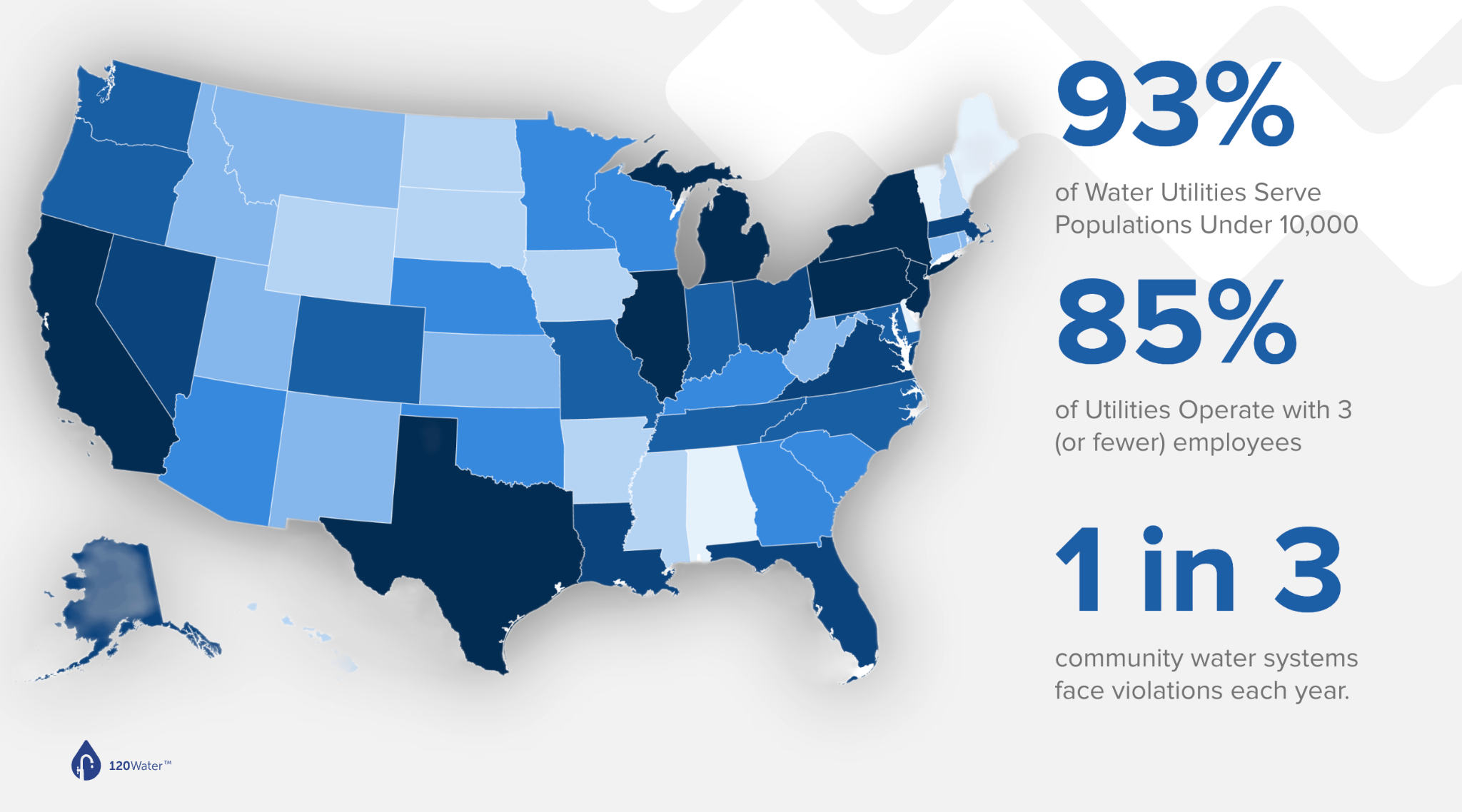
One in three utilities face a compliance violation in any given year. Dig into those numbers, and most violations are not about water quality. They are about administrative failures.
Someone filed a report late. A public notice did not go out on time. Data sat in different places, but people couldn’t pull it together fast enough.
The problem is not a lack of effort. The systems couldn’t handle this volume of work because no one built them for it, and regulatory requirements keep growing.
Four Stages of Operational Maturity: Where Does Your Utility Stand?
Through years of work with over 8,000 utilities and 7 state agencies, 120Water has seen a clear pattern.
Utilities often evolve their operations in similar ways. Most organizations move through four stages.
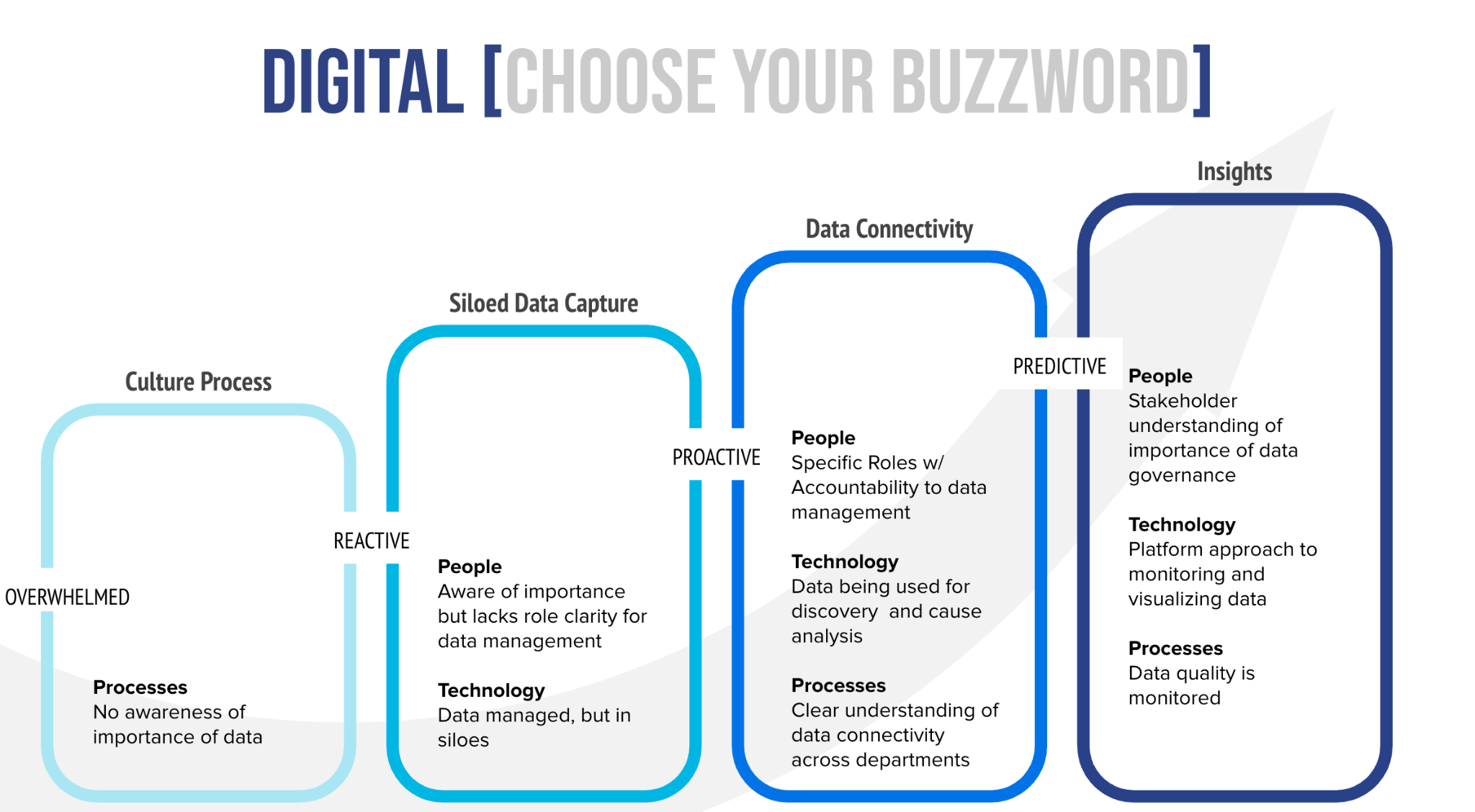
Stage 1: Overwhelmed.
Data is fragmented or nonexistent, and teams are reactive to regulatory demands. No single source of truth exists.
Stage 2: Reactive.
Data exists but lives in silos, and reporting is manual and time-consuming. Staff are aware of the gaps but lack the right water data platform to close them.
Stage 3: Proactive.
A single platform centralizes programs, and teams hold clear accountability. Data flows between functions and connects directly to both regulatory reporting and public communications.
Stage 4: Predictive.
Teams can integrate historical data, infrastructure records, and program outcomes so they can anticipate needs. That way they can model scenarios and stay ahead of compliance deadlines.
What Moving Up the Curve Actually Looks Like
These stages are not theoretical. Here is what the progression looks like for real utilities.
From overwhelmed to reactive: Valley Rural Utility Company
Valley Rural came to 120Water with more than 25% of their service line inventory listed as unknown, meaning no data and no starting point. By creating a clear digital verification process, they reduced the number of unknown service lines.
They used the platform to filter and rank the unknowns. In under a year, the total unknown service lines dropped from 661 to 26.
From reactive to proactive: Lincoln, Nebraska
Lincoln manages 93,000+ service lines across multiple material types. Annual resident notifications were manual and time-consuming. After they centralized their data on one water data platform, notifications now go out automatically. Each line segment uses the correct template.
That data goes straight to a public dashboard, so residents and regulators can track the program in real time.
From proactive to predictive: El Paso, Texas
El Paso entered 2025 with 130,000 unknown service lines and a 2027 LCRI (Lead and Copper Rule Improvements) compliance deadline. Instead of costly physical inspections, 120Water worked with the city to use predictive modeling.
They used historical records, construction-era data, and neighborhood indicators. El Paso's unknown service lines dropped from 130,000 to fewer than 13,000, with no additional field visits for the reclassified lines. The result was an estimated savings of approximately $50,000.
Explore El Paso Water's full story here.
The Pressure Is Only Going to Increase
The forces pushing utilities toward modernization are not slowing down:
- Aging infrastructure is a growing problem
- Lead and copper rule requirements are tightening
- PFAS programs create new responsibilities
- Cybersecurity mandates demand extra time and resources
- Demographic shifts can shrink rate bases.
Each new requirement puts additional strain on teams that already work at full capacity.
The utilities navigating this well share a common trait. They stopped treating each regulation as a separate problem.
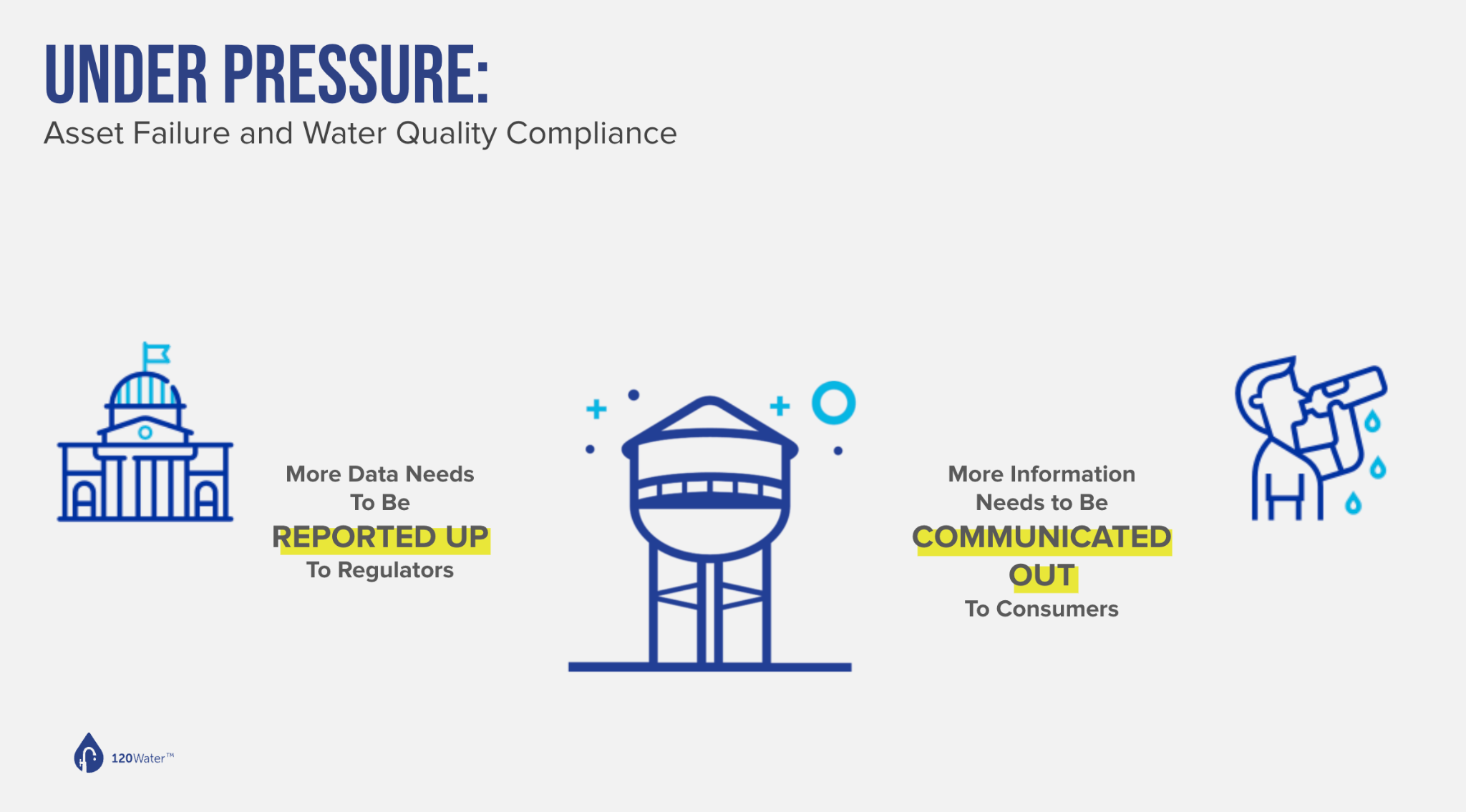
They started building a connected data foundation. This lets utilities report to regulators and communicate to residents. Which means they no longer rebuild their workflow from scratch each time.
That foundation is what separates proactive utilities from those that are perpetually reactive.
Where to Start
The most common question we hear from utility executives is: where do we begin?
The honest answer is this: start with your biggest pain point. Work with a partner who helps you build for the long term, not just this quarter.
Whether you still use spreadsheets or run a digital program with gaps, the goal is the same:
You need water compliance software that keeps all data in one platform. It should automate reporting workflows and link your public communications. Then your team can focus on work that actually needs human judgment.
120Water works with utilities at every stage of this journey. To see what the path forward looks like for your system specifically, let’s talk.
See how 120Water helps utilities move from reactive to proactive. Schedule a demo at 120water.com/contact to start the conversation.
.png)
.png)