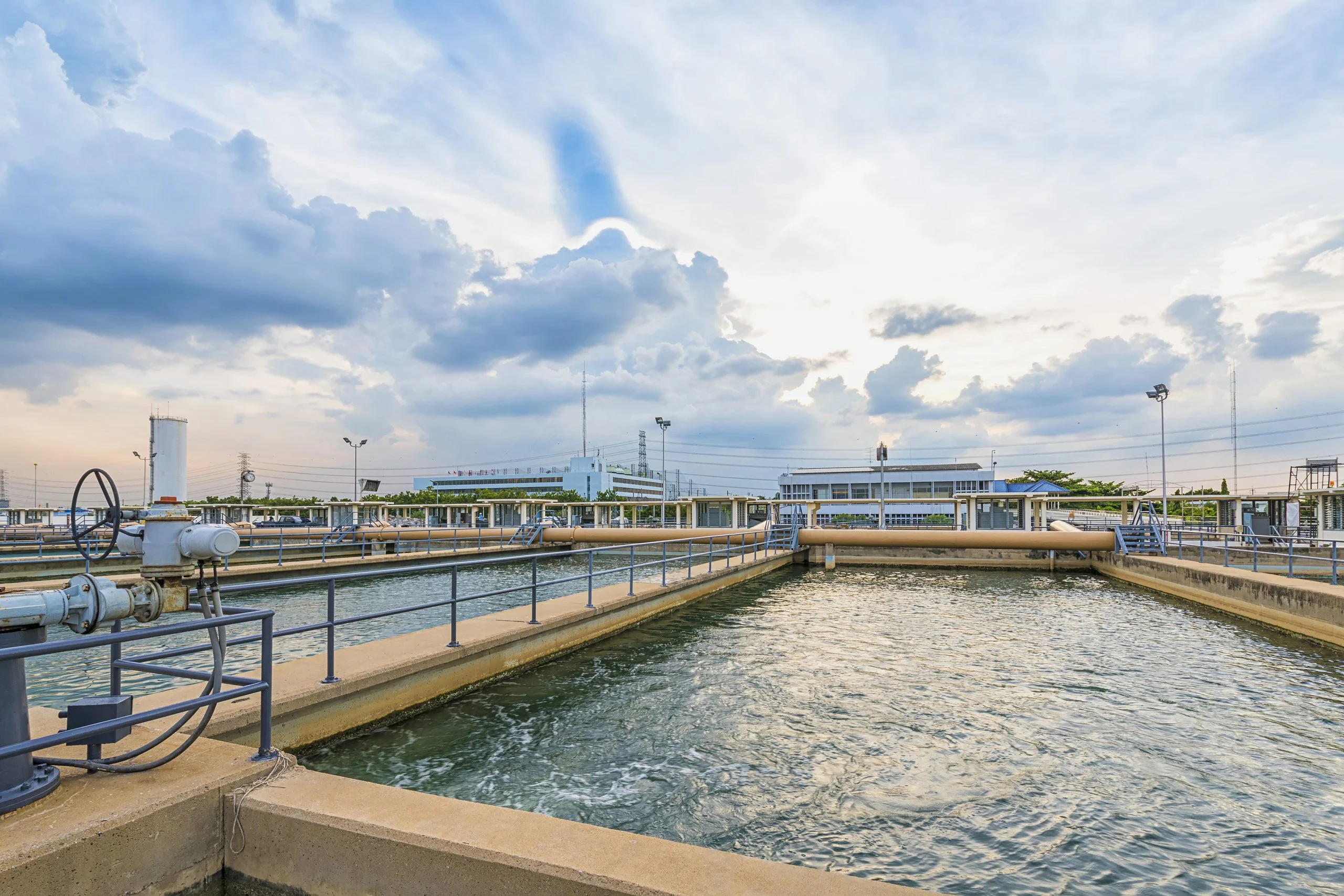
[WBIW] City Of Bloomington Utilities Participates In Wastewater COVID Study
Wastewater Monitoring

AUGUST 18, 2020
(BLOOMINGTON) – Starting this week, the City of Bloomington Utilities (CBU) will test wastewater for coronavirus in an effort to gauge viral prevalence in the community. For ten weeks until October 23, wastewater professionals from CBU will collect samples three times each week at eight sites across Bloomington, including each of the two wastewater treatment plants. The testing of samples is being conducted by multiple private, independent laboratories.
Insights, resources, and tips for water operators
Spreadsheets were built to hold numbers, not run a compliance program. They can't sync in real time, validate entries, or connect to other systems. For water utilities managing service line inventories and sampling schedules, that gap turns into missed deadlines, incomplete reports, and rising compliance risk as data volume grows.
Why Do Spreadsheets Break Down as a Water Utility Grows?
A spreadsheet works fine for one person and a small, static dataset. It stops working once a utility needs to track thousands of service line records, coordinate field verifications, and report to a state agency on a fixed timeline.
The problem is architecture. A spreadsheet is a file. Compliance work needs a system. Specifically, spreadsheets lack:
- Real-time sync. Field staff, lab technicians, and compliance managers can end up working from different versions of the same file.
- An audit trail. When a regulator asks who changed a record and when, there's often no reliable answer.
- Validation rules. A typo in a service line material field doesn't get flagged. It just becomes bad data.
- Connections to other systems. Lab results, GIS records, and customer data sit in separate files that never talk to each other.
The result: reports that should take minutes require days of manual data entry. When a regulator calls with a question, the answer is rarely at anyone's fingertips.
Regulatory pressure makes the gap worse. The LCRI requires accurate service line inventories on a fixed timeline, and PFAS monitoring is adding sampling requirements many utilities aren't yet equipped for. Missed or late samples already account for roughly 75% of drinking water violations. A workflow with no reminders, no validation, and no shared visibility makes that mistake easy to repeat.
What Does This Cost Utilities in Practice?
Beyond inefficiency, there's a fragility problem. When data lives in a spreadsheet on one person's desktop, that person becomes a single point of failure. Every retirement takes years of institutional knowledge with it, because that knowledge lived in someone's head, not in a system.
That fragility compounds every time a utility adds a new program, faces a new regulation, or loses the one staff member who understood how the old system worked.
How Do You Know You've Outgrown Spreadsheets?
A few signs are consistent across utilities:
- Preparing a compliance report takes days of manual data gathering instead of minutes.
- Multiple people maintain their own versions of "the real" inventory or sampling schedule.
- A regulatory question can't be answered without pulling several people off other work.
- Field data is collected on paper or in disconnected apps and re-entered later, introducing errors.
- One or two staff members are the only ones who fully understand how the current system works.
If two or more of these sound familiar, the issue isn't staff effort. It's that the underlying data infrastructure hasn't kept pace with what regulations and the public now expect.
What's the Alternative to Spreadsheet-Based Compliance?
The utilities pulling ahead aren't necessarily the largest or best-funded. They treat data as infrastructure, as fundamental as the pipes in the ground, and build one source of truth that connects sampling, service line inventories, lab results, and public communications.
This doesn't mean digitizing everything at once. Most utilities start by consolidating the highest-priority data, usually service line inventory and sampling records, into one system. Automating reporting and communication workflows comes next, once that foundation is solid.
Here’s what that shift looks like in practice:
| Utility | Starting Point | Outcome After Centralizing Data |
|---|---|---|
| A Rural Indiana Utility | 661 unknown service lines | Reduced to 26 (96% reduction) |
| Lincoln, NE | 93,000+ service lines to notify | 7,000+ resident notices sent in hours, not days |
| El Paso Water (TX) | 130,000 unknown service lines | Reduced to 13,000, saving an estimated $150,000 via predictive modeling |
Effort wasn't the bottleneck in any of these cases. A spreadsheet can't drive workflows, trigger notifications, or flag anomalies before they become violations. A tool that can do that changes what's possible.
If you want a deeper framework for figuring out where your utility stands and what the next step looks like, our webinar on digital maturity for water utilities walks through four stages, from overwhelmed and spreadsheet-dependent to fully predictive, with real case studies like the ones above.
FAQ
Do spreadsheets work for small water utilities?
They can work temporarily for very small, simple datasets, but even small utilities run into trouble once compliance requirements involve multiple people, recurring deadlines, or field data collection.
What replaces spreadsheets for compliance tracking?
A centralized data management platform that connects service line inventories, sampling schedules, lab results, and public communications, so data updates once and flows everywhere it's needed.
How long does it take to move off spreadsheets?
It varies by utility size and data complexity, but the first phase (consolidating and normalizing existing data) is typically the longest step and shouldn't be rushed, since shortcuts here create problems at every later stage.
What's the biggest risk of staying spreadsheet-based?
Staff turnover becomes an operational risk. When compliance knowledge lives in personal files and a few people's heads instead of a shared system, every departure takes real capability out the door with it.
We spend a lot of time talking to the people who use 120Water every day. Program managers. Compliance leads. And more and more, the crews out in the field doing the actual work: verifications, replacements, kit drop-offs, the stuff that has to happen before any of it shows up in a report.
One thing we kept hearing, no matter who we asked: the work and the paperwork are still two different jobs.
A crew finishes a verification. They write it down, or fill out a form on a tablet, or snap a photo of a meter. Then, at some point, someone has to take all of that and get it into the system. Maybe that's the same day. Maybe it's Friday afternoon for the whole week. Either way, there's a gap between what happened in the field and what your compliance record says happened. And in this industry, that gap matters. The EPA's own database still shows roughly 22 million service lines of unknown material nationwide, including an estimated 2.1 million known lead lines still in the ground. Finding, verifying, and replacing those lines faster starts with knowing, in real time, what's already been done.
So we built something for that gap. It's called 120Field, and it's live today.
One tool, not three habits
120Field is a single, mobile-friendly tool for capturing service line verifications, replacements, and sample or pitcher kit drop-offs. No clipboard, no separate notebook for each program, no trying to remember at 4 p.m. what happened at three different addresses. Crews log the work once, right from wherever they are, on whatever device they've got in hand.
That's the part we're most excited for field teams to feel. You shouldn't need three tools and a good memory to do your job well. You should need one tool that works the way your day actually works.
The record catches up to reality
Here's the part we think office staff and compliance leads are going to love: what gets logged in the field flows straight into 120Water's platform. No export. No import. No re-typing a stack of paper forms into a spreadsheet at the end of the week. The compliance record reflects what actually happened, the same day it happened.
If a regulator calls and asks where things stand, the answer in your system is the real answer, not last Tuesday's answer.
Built for how fieldwork actually happens
A lot of utilities have service areas where cell signal is a suggestion, not a guarantee. We know that, so 120Field works fully offline and syncs automatically once you're back in range. Smart routing helps plan the most efficient stop order for the day. And if your hands are full or you're standing somewhere typing isn't practical, voice-to-text has you covered.
None of this is about replacing the judgment of the people who do this work. It's about giving that work somewhere reliable to go, without adding a second job on top of the first one.
A partnership built to move fast
We didn't build the technology behind 120Field alone. We partnered with TeamSolve, a company that's spent years building field operations technology for water and wastewater utilities, to bring this to you faster and get it right. 120Water knows compliance and the relationships that make programs work. TeamSolve knows what it takes to build something that holds up in the field. Put those together, and you get a tool that actually fits how the work gets done, not a piece of software built for the office and handed down to the field.
What this means going forward
120Field is available now if you're running, or planning, a service line verification, replacement, or sampling program. If your crews are still working off paper, this is a way to say yes to something better without asking them to change how they do their jobs.
We also see this as a step toward something bigger: a future where the people doing the work, the people running the program, and the people overseeing it are all looking at the same real-time picture. We'll have more to say about that down the road. For now, we're glad 120Field is in your hands.
Have questions about getting 120Field set up for your team? Reach out to your 120Water account team. We'd love to help you get started.
Every few weeks it feels like there's a new Environmental Protection Agency (EPA) release to keep an eye on, and it's easy to let some of these slide by, especially when the headline says "voluntary." This one's worth a few minutes, though, because it touches on how your state may be looking at your system during routine inspections going forward.
Here's where we're headed in this one. First, I'll walk through what the EPA actually released and when. Second, we'll get into why they built it and what problem it's trying to solve. Third, I'll talk about what this means for your system day to day. And big picture, I'll tell you why this is worth your attention even though it's voluntary.
The timeline
On August 13, 2026, the EPA released a new guidance document aimed at state drinking water agencies, called the Systemic Issues Checklist. It was developed in partnership with states, and the Association of State Drinking Water Administrators (ASDWA) came out in support of it right alongside the release. That's a signal this wasn't built in a vacuum. The EPA is framing it as part of its broader Powering the Great American Comeback Initiative, and specifically as a way to support states in their role as co-regulators under the Safe Drinking Water Act.
So that's the what and the when. Now let's get into the why, because that's really the part worth understanding.
Why this checklist exists
The EPA built this to help state agencies identify, track, and address what they're calling systemic issues. Now what's a systemic issue? It's a problem that, left alone, could eventually cause a disruption in water service if something were to fail. Think of it like the difference between a check-engine light and the car actually breaking down on the highway. The checklist is the EPA's attempt to get states looking for the check-engine light: things like source water demand creeping toward capacity, treatment equipment that's starting to malfunction, or a water system that's seeing frequent main breaks. None of those are emergencies on their own. But strung together, or left unaddressed, they can turn into exactly the kind of failure that takes a system offline.
That's the logic here: catch it early, during a routine assessment, instead of catching it later during an actual outage.
How it's meant to be used
A few things worth knowing about how this is structured, because I think this is where a lot of the confusion could come in if you just read a headline about it.
- Number one: It's voluntary. States are not required to adopt it.
- Number two: It's designed to slide into existing inspection programs, specifically the sanitary surveys that states already conduct. The EPA was intentional about not creating a new administrative layer on top of what states and systems already do.
- Number three: It's a documentation and follow-up tool, not just a checklist to fill out once. It gives inspectors a place to flag systemic issues during a routine assessment and includes recommendations for addressing them over the longer term, not just a one-time fix.
So the recommendation we're seeing across the industry here is pretty simple: even though your system isn't required to do anything differently because of this checklist, it's worth understanding what your state primacy agency may start looking for during your next sanitary survey. If a systemic issue does get flagged, this checklist is designed to route you toward the funding and technical assistance already available, not just leave you with a finding and no path forward.
What this might look like for you
This might not be you, but I think it represents where a lot of systems are: you've got aging infrastructure, you've had a main break or two, and you've never had a formal, documented way to connect those dots into "systemic issue" versus "one-off problem." That's really the gap this checklist is trying to close, on the state side of the table. And because ASDWA is on board with it as a tool for strengthening sanitary surveys and long-term resilience, my expectation is we'll see more states start incorporating it into their inspection routines over the coming months, even without a mandate to do so.
The bottom line
This isn't a new rule, and it's not a new burden. It's a documentation framework meant to help your state catch small problems before they become service disruptions, and to connect those findings to funding that already exists. We'll keep tracking how states roll this out, the same way we've been tracking state-level guidance on the LCRI, and we'll flag it if any states start treating this checklist as something closer to a requirement in practice. For now, the practical next step is simple: know that this exists, and don't be surprised if it shows up as part of your next sanitary survey conversation.
.png)
.png)