How was your state impacted by EPA’s updated DWSRF funding allotments and Lead Service Line projections?
Funding & Budgeting
Lead & Copper Rule
LSL Inventory

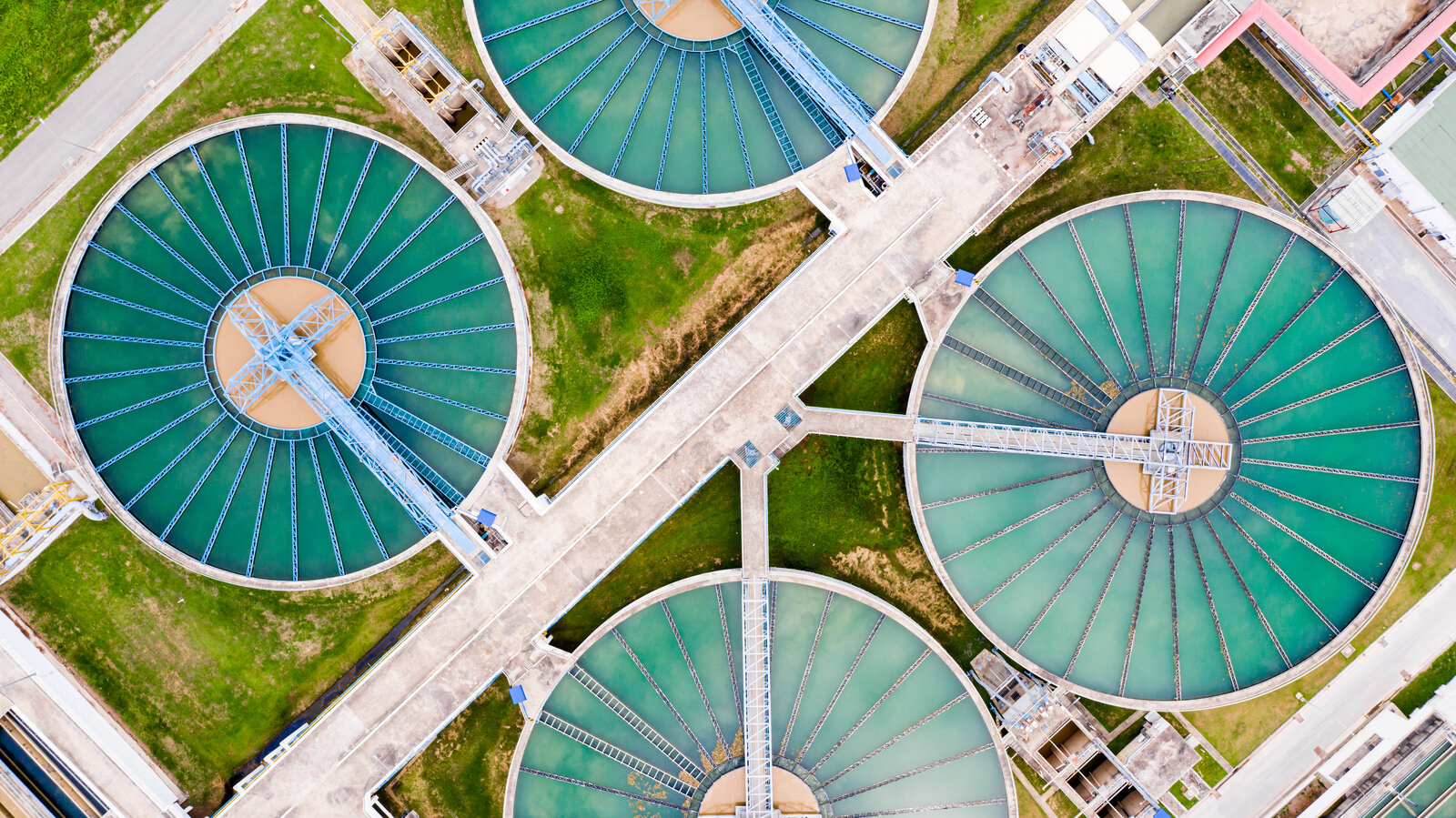
On April 4th, the EPA released the fiscal year (FY) 2023 Drinking Water State Revolving Fund (DWSRF) allotments for states. These allotments are based on a formula incorporating results from the Drinking Water Infrastructure Needs Survey and Assessment (DWINSA). The 2023 DWSRF allotments have been updated to reflect data collected in 2021 for the 7th DWINSA that surveyed over 3,600 public water systems. This allotment formula distributes the DWSRF base appropriation, Bipartisan Infrastructure Law (BIL) General Supplemental, and BIL Emerging Contaminant funds. Funding allotments for your state can be found in the Allocations Memo (Attachment A on page 6). As estimated by the 7th DWINSA, results found that the 20-year national drinking water infrastructure need for the United States is $625 billion. The increase is 32% more than the 6th DWINSA, which found a $472.6 billion need.
For the first time in assessment history, the 7th DWINSA collected information on service lines from water systems across the country based on information reported by each state. EPA projects a national total of 9.2 million LSLs. State-specific Lead Service Line projections are on pages 4 and 5 of the 7th DWINSA Fact Sheet. DWINSA results were used to develop an LSL-specific formula allowing states with more LSLs to receive financial assistance commensurate with their need. This LSL-specific formula will allocate the funds for FY 2023 (and the remaining years) BIL DWSRF Lead Service Line Replacement (LSLR). State-specific BIL DWSRF LSLR allocations from the Memo above can be viewed in Attachment A. In addition to replacement projects, BIL DWSRF LSLR funding can and should be used for LSL identification, including the development of LSL inventories as required by the LCRR.
Insights, resources, and tips for water operators
What is a Consumer Confidence Report (CCR)?
A CCR is the annual water quality report that community water systems (CWS) must send each year. It shows where your water comes from, whether it contains any contaminants, and how the results compare to EPA standards.
The EPA's revised Consumer Confidence Report (CCR) rule is the most significant update to CCR requirements since 1998. The new rule modernizes delivery options, expands communication frequency, and builds on existing requirements. Compliance is mandatory and systems that fail to meet requirements face enforcement exposure.
As you prepare to update your 2027 CCR, keep these key changes in mind.
Timeline
- June 24, 2024: New CCR rule is effective.
- January 1, 2027: Compliance starts with the new CCR.
- July 1, 2027: First reports are due.

The Four Biggest Changes
1. Expanded Delivery Options
CWSs may use electronic delivery methods (email, URLs, etc.) in accordance with the 2013 delivery options memo. However, they must provide a paper copy of their CCR to any customer upon request.
CWSs serving ≥50,000 people must post their current year's report to a publicly accessible site on the Internet.
2. Report Timing
All CWSs serving 10,000 or more people must distribute the CCR twice per calendar year (July 1st and December 31st).
CWSs serving less than 10,000 people must provide the report to their customers annually by July 1st.
3. New Elements
New sections include a report summary, corrosion control statement, and additional lead-related information.
4. Certification Timing
CWSs must submit a copy of the CCR and certification to the primacy agency. They must do so within 10 days of the CWS distributing the reports to customers.
Your Compliance Action Checklist
- Audit your current CCR template with the new content requirements. Identify any gaps. Prepare language for any new or updated sections.
- Evaluate current delivery methods to see if expanded electronic options are appropriate.
- Monitor CCR template availability with your state.
- Prepare for biannual delivery if you serve >10K people and posting to the internet if you serve >50,000 people.
- Understand how translation access requirements may impact your system
- Prepare for certification and report delivery to the state within 10 days
- Consider opportunities to transition from meeting compliance obligations to an industry-leading program
Why These Changes Matter Beyond Compliance
Consumer Confidence Reports are often the one direct communication a water system sends to every customer each year. EPA's revisions are designed to make that communication more meaningful by:
- Covering contaminants customers are increasingly worried about
- Reaching customers in the languages they speak
- Making it easier for people to understand what's in their water and what their system is doing about it
Systems that treat the CCR as a minimum-compliance exercise risk missing an opportunity. A well-executed CCR builds public trust, reduces inbound inquiry volume, and demonstrates your team's operational competence.
The systems doing this best are approaching the new requirements as a design challenge rather than a paperwork task.
Important Resources
- EPA Questions & Answers: Consumer Confidence Report Rule Revisions
- Final EPA Consumer Confidence Report Rule Revisions Comparison Fact Sheet
- EPA Consumer Confidence Report Delivery Options memorandum
- Federal Register Notice: Final Revised Consumer Confidence Report Rule
Learn how 120Water supports CCR compliance.
From CCR templates to compliance tracking, 120Water gives water systems the tools to meet compliance deadlines with confidence. Contact us at 120water.com/contact to learn more.
The 2026 AWWA Annual Conference and Exposition (ACE)
From June 21-24, more than 10,000 water professionals from 40 countries attended AWWA’s 2026 Annual Conference and Exposition. Under the theme “Water Heroes,” the conference honored water professionals who work behind the scenes to help deliver safe drinking water to communities every day.
Outgoing President Heather Collins challenged the water community to move beyond invisibility, saying the workforce that keeps water flowing deserves to be seen, understood, and appreciated.
The conference concluded with a gavel-passing ceremony as Brent Tippey — a nearly 30-year veteran of the water sector — assumed the AWWA presidency from Collins.
Tippey said the water community needs AWWA’s 145-year unbroken legacy of leadership in technical content, knowledge exchange, and regulatory engagement now more than ever.
Inside the Program: The Conversations Shaping the Water Sector
ACE26 comprised 215 educational sessions spanning 23 tracks. The following list highlights the most popular tracks by session count.

- Intelligent Water (22 sessions)
Data, AI, and smart systems are no longer emerging themes but the defining direction of the water sector.
- Water Utility Management (14 sessions)
Reflects the enduring operational complexity of running modern utilities.
- Advances in Water Treatment (14 sessions):
Addresses the foundational science and technology utilities need to meet evolving water quality demands.
- Infrastructure Management (12 sessions):
Underscores the urgency utilities face in addressing aging systems amid growing capital constraints.
- Water Resources Planning, Protection and Management (10 sessions):
Speaks to mounting pressures around supply reliability amid climate variability and growing demand.
- Financial, Management, and Legal (10 sessions)
Reflects the complex pressures on rates, funding, and regulatory compliance utilities must navigate.
- Reuse (9 sessions)
Signals the continued rise of reuse as a mainstream supply strategy rather than a niche alternative.
- Water Education and Workforce (8 sessions)
Reflects growing industry concern over the talent pipeline needed to operate increasingly complex systems.
- The Latest on Lead and Copper (8 sessions)
Driven by sweeping compliance demands of the Lead and Copper Rule Improvements (LCRI), the most significant lead rule update in decades.
- Research (8 sessions)
Captures the sector's need to translate emerging science into actionable practice for utilities.
120Water at ACE26
120Water had a strong presence on the expo floor. Our team connected with water utilities, consultants, and regulators from across the country.
Our booth showcased 120Water solutions for water quality and asset compliance. These tools help water systems connect data, save time and money, and improve compliance.
Conversations at the booth reflected the urgency utilities feel as regulatory deadlines approach and reinforced why a centralized water data platform matters more than ever.

National Collaborative Honors Excellence in Lead Pipe Replacement
Timed to coincide with ACE26, the Lead Service Line Replacement Collaborative marked its 10th anniversary by recognizing 16 people and programs for excellence in lead service line replacement. The awards ranged from technical efficiency and fiscal savvy to community engagement and equitable access.
Among the honorees were three 120Water customers:
- Denver Water’s Lead Reduction Program – Recognized for outstanding leadership across multiple categories
- Greeley, Colorado’s Lead Protection Program – Excellence in Community Engagement
- The Wilmington Water Lead Reduction Program – Fiscal Savvy and Funding Innovation
With over 4 million lead service lines still connected to water systems nationwide, the awards highlight utility-led collaboration. 120Water is proud to support this work as customers advance LCRI compliance and lead-reduction programs.
Looking Ahead: WaterPro 2026 in Phoenix
With ACE26 now in the books, the 120Water team is already looking ahead to the next major event.
Widely known as the “Industry Event of the Year” for rural and small water systems, NRWA WaterPro will be held September 14–16, 2026. The conference will take place at the Phoenix Convention Center in Phoenix, Arizona.
120Water will be on the WaterPro show floor in September, and we look forward to connecting with you. We will share more information soon about our booth location and how to find us at the show. Keep up with 120Water updates on our LinkedIn page and in our monthly newsletter.
In the meantime, learn more about how we help water systems of all sizes navigate today’s compliance landscape. Contact our team at 120water.com/contact to discuss your system's needs.
Water utility executives are facing a paradox. Their teams have more data than ever. They have sampling results, service line records, lab reports, and regulatory submissions.
Yet many leaders still cannot answer a simple question: Are we on track?
That gap between having data and acting on it costs utilities. It hurts efficiency, raises compliance risk, drives staff burnout, and weakens community trust.
The good news: the utilities closing that gap are not bigger or better funded than yours. They chose to modernize how they manage water quality compliance programs, and the results are measurable.
The Real Reason Utilities Fall Behind
This is not a technology problem as much as it is a capacity problem compounded by fragmentation.
Consider the scale of the challenge:
In the U.S., 85% of water utilities have three or fewer employees.
Yet these small teams manage complex sampling programs, service line inventories, regulatory submissions, and public communications. Often, they do this across disconnected spreadsheets, paper records, and siloed databases.

One in three utilities face a compliance violation in any given year. Dig into those numbers, and most violations are not about water quality. They are about administrative failures.
Someone filed a report late. A public notice did not go out on time. Data sat in different places, but people couldn’t pull it together fast enough.
The problem is not a lack of effort. The systems couldn’t handle this volume of work because no one built them for it, and regulatory requirements keep growing.
Four Stages of Operational Maturity: Where Does Your Utility Stand?
Through years of work with over 8,000 utilities and 7 state agencies, 120Water has seen a clear pattern.
Utilities often evolve their operations in similar ways. Most organizations move through four stages.

Stage 1: Overwhelmed.
Data is fragmented or nonexistent, and teams are reactive to regulatory demands. No single source of truth exists.
Stage 2: Reactive.
Data exists but lives in silos, and reporting is manual and time-consuming. Staff are aware of the gaps but lack the right water data platform to close them.
Stage 3: Proactive.
A single platform centralizes programs, and teams hold clear accountability. Data flows between functions and connects directly to both regulatory reporting and public communications.
Stage 4: Predictive.
Teams can integrate historical data, infrastructure records, and program outcomes so they can anticipate needs. That way they can model scenarios and stay ahead of compliance deadlines.
What Moving Up the Curve Actually Looks Like
These stages are not theoretical. Here is what the progression looks like for real utilities.
From overwhelmed to reactive: Valley Rural Utility Company
Valley Rural came to 120Water with more than 25% of their service line inventory listed as unknown, meaning no data and no starting point. By creating a clear digital verification process, they reduced the number of unknown service lines.
They used the platform to filter and rank the unknowns. In under a year, the total unknown service lines dropped from 661 to 26.
From reactive to proactive: Lincoln, Nebraska
Lincoln manages 93,000+ service lines across multiple material types. Annual resident notifications were manual and time-consuming. After they centralized their data on one water data platform, notifications now go out automatically. Each line segment uses the correct template.
That data goes straight to a public dashboard, so residents and regulators can track the program in real time.
From proactive to predictive: El Paso, Texas
El Paso entered 2025 with 130,000 unknown service lines and a 2027 LCRI (Lead and Copper Rule Improvements) compliance deadline. Instead of costly physical inspections, 120Water worked with the city to use predictive modeling.
They used historical records, construction-era data, and neighborhood indicators. El Paso's unknown service lines dropped from 130,000 to fewer than 13,000, with no additional field visits for the reclassified lines. The result was an estimated savings of approximately $50,000.
Explore El Paso Water's full story here.
The Pressure Is Only Going to Increase

The forces pushing utilities toward modernization are not slowing down:
- Aging infrastructure is a growing problem
- Lead and copper rule requirements are tightening
- PFAS programs create new responsibilities
- Cybersecurity mandates demand extra time and resources
- Demographic shifts can shrink rate bases.
Each new requirement puts additional strain on teams that already work at full capacity.
The utilities navigating this well share a common trait. They stopped treating each regulation as a separate problem.
They started building a connected data foundation. This lets utilities report to regulators and communicate to residents. Which means they no longer rebuild their workflow from scratch each time.
That foundation is what separates proactive utilities from those that are perpetually reactive.
Where to Start
The most common question we hear from utility executives is: where do we begin?
The honest answer is this: start with your biggest pain point. Work with a partner who helps you build for the long term, not just this quarter.
Whether you still use spreadsheets or run a digital program with gaps, the goal is the same:
You need water compliance software that keeps all data in one platform. It should automate reporting workflows and link your public communications. Then your team can focus on work that actually needs human judgment.
120Water works with utilities at every stage of this journey. To see what the path forward looks like for your system specifically, let’s talk.
See how 120Water helps utilities move from reactive to proactive. Schedule a demo at 120water.com/contact to start the conversation.

.png)