Where Lead Lurks And Why Even Small Amounts Matter
Emerging Contaminants
Sampling

Aug. 12, 2016 – NPR
Where Lead Lurks and Why Even Small Amounts Matter
Lead problems with the water in Flint, Mich., have prompted people across the country to ask whether they or their families have been exposed to the toxic metal in their drinking water, too.
When it comes to assessing the risk, it’s important to look in the right places.
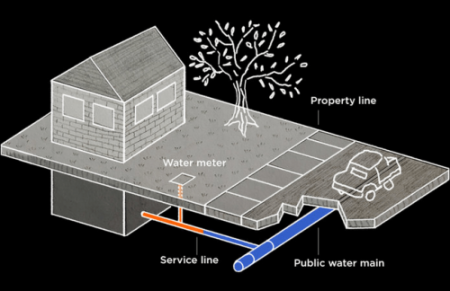
Even when municipal water systems’ lead levels are considered perfectly fine by federal standards, the metal can leach into tap water from lead plumbing.
Kate Gilles moved to Washington, D.C., from Rhode Island for a job in international public health six years ago. When she was pregnant with her son, now 3, and her daughter, who turned 1 in July, she says she paid close attention to her health.
She ate better. She exercised. She followed her doctor’s orders. Gilles checked off every task on the long list of things that she was supposed to do to help protect her babies.
But that was before Flint, and it never occurred to her to test her drinking water for lead.
Insights, resources, and tips for water operators
November 1, 2027 isn't as far away as it feels. The utilities getting a head start on their baseline LCRI inventory now are going to have a much easier time than the ones who wait. That was the throughline of our January webinar, and here's a taste of what it covered.
The state of play
The Lead and Copper Rule Improvements (LCRI) is finalized. It's also being challenged in court. Both of those things are true at once. The timeline runs from the Environmental Protection Agency's (EPA) October 2024 finalization through a petition for judicial review from the American Water Works Association (AWWA), a pause requested by the incoming administration, and up to oral arguments expected this spring.
The short version: the EPA intends to keep the LCRI as written, and the lawsuit continues in the background. The practical takeaway hasn't changed from last year either. Prepare as if the current rule holds. Catching up later is a lot harder than staying ahead now.
There's also a fiscal year 2025 funding data drop from last November tied to the Infrastructure Investment and Jobs Act (IIJA) worth knowing about, including a shift in the national lead service line estimate and what it means for how funding is allocated across states.
Connectors: the new addition to your service line inventory
This year's inventory has a new resident: connectors. Think pipe – not fitting, not fixture, not solder. Most states treat connector material as separate from service line classification, and right now there's no hard deadline to identify or replace them.
That doesn't make it a "do nothing" item. A handful of common questions came up from utilities working through this already, and a few states are already showing some openness to flexibility here, which is worth knowing before you build your approach.
Turning unknown service lines into progress
Statistical analysis and predictive modeling are two very different tools depending on whether lead or galvanized requiring replacement (GRR) has already turned up in a system, and real case studies from utilities in North Carolina, Georgia, Louisiana, California, Texas, Indiana, and Wyoming showed what each approach looks like in practice.
Some systems went from thousands of unknowns to a fully non-lead classification with a few hundred targeted inspections. Others are mid-process, pivoting strategies as state guidance evolves in real time. One theme showed up again and again: the utilities getting ahead of this aren't necessarily the biggest ones or the ones with the cleanest records. They're the ones who started building their case early.
A strategy some utilities are exploring to reclassify certain galvanized service lines came up too, along with a preview of what non-lead validation looks like down the road in 2034.
Watch the Full Session
There's a lot packed into this LCRI Inventory webinar:
- Timelines
- Funding shifts
- Connector definitions
- Verification math
- Real utility numbers
- Q&A covering everything from Consumer Confidence Reports (CCR) to sampling tiers.
If any of this sounds like what your team is working through right now, the full recording walks through every example in detail, numbers included.
Want the full session? Watch the webinar replay here.
.png)
Compliance webinars can get theoretical pretty fast, but this one didn't.
Our February session paired regulatory context with a genuinely practical playbook for verifying unknown service lines, backed by a technical assistance program that has already identified over 20,000 service lines across three states and a field contractor with thousands of inspections under his belt.
Here's what stood out.
A quick regulatory refresher
The Lead and Copper Rule Improvements (LCRI) status has not changed since our last recap:
- The Environmental Protection Agency (EPA) has finalized the rule.
- The American Water Works Association (AWWA) is still challenging it in court.
- The EPA still plans to defend the rule as written.
The advice is the same too: Prepare for LCRI compliance as if the rule holds since the baseline service line inventory deadline, November 1, 2027, is approaching fast.
One update worth flagging: five states (Illinois, Michigan, Pennsylvania, New Jersey, and New York) currently treat connector material as something that does affect service line classification, unlike most states where it doesn't. If you're in one of those states, it's worth checking.
Verification is a project, not a task.
The bulk of the session made a simple but important point: Treating lead service line verification like a single to-do item is exactly how it goes sideways.
One utility's do-it-yourself attempt got through 30 addresses in two weeks, with data scribbled on paper that was barely legible by the time it made it back to the office. Not exactly audit-ready.
The alternative is to treat it like any other capital project, broken into three phases:
- What you know before you start
- The actual fieldwork
- What happens with the data afterward
Most of the payoff comes from phase one. The more due diligence done up front – records review, customer surveys, tracking down materials already documented from unrelated projects like meter change-outs – the fewer expensive digs are needed later.
Statistical analysis and predictive modeling both showed up again here as ways to shrink that inspection pool, with a rule of thumb for choosing between them:
- Statistical analysis works well when a system has no known lead service lines or galvanized requiring replacement (GRR).
- Predictive modeling picks up once some lead service lines or GRR have already been found.
Choosing verification tools and contractors
A geographic information system (GIS) came up as the recommended way to manage field data, both for its accessibility to field crews and its ability to feed a dedicated water data platform for reporting and dashboards. A live example showed how a simple red-to-green dot system can track inspection progress across an entire project.
Contractor selection got real talk too. The advice: look past the local guy who fixes leaks and installs service lines, and vet specifically for experience with this kind of verification work, GIS compatibility, and a willingness to work without constant utility oversight.
A signed statement of work covering responsibilities, deliverables, pricing, and timeline was called out as a must, not a nice-to-have, so expectations stay aligned from the start.
What verification actually looks like in the field
The session's field contractor walked through what a typical inspection day looks like, from routing crews (harder than it sounds in an unfamiliar system) to reading the room during kickoff meetings (staff who know their system inside and out make everything run more smoothly).
GPS points and photo documentation from every inspection were highlighted as the backbone of defensible data, which matters if records ever face regulatory scrutiny.
Customer communication came up as its own art form. Timing mailers and social posts too early means people forget; too late means confused customers calling the police on a crew standing near their meter box. A few real examples of both extremes made the case for planning your LCRI communications strategy early.
Watch the Full Session
We discussed many more important verification topics, including:
Funding options, inspection method tradeoffs (meter pit versus potholing versus hydrovac), documentation strategies, and a full Q&A covering everything from access agreements to lead service line replacement plans when a homeowner owns the entire service line.
Want the full session? Watch the webinar replay here.
.png)
What is a Consumer Confidence Report (CCR)?
A CCR is the annual water quality report that community water systems (CWS) must send each year. It shows where your water comes from, whether it contains any contaminants, and how the results compare to EPA standards.
The EPA's revised Consumer Confidence Report (CCR) rule is the most significant update to CCR requirements since 1998. The new rule modernizes delivery options, expands communication frequency, and builds on existing requirements. Compliance is mandatory and systems that fail to meet requirements face enforcement exposure.
As you prepare to update your 2027 CCR, keep these key changes in mind.
Timeline
- June 24, 2024: New CCR rule is effective.
- January 1, 2027: Compliance starts with the new CCR.
- July 1, 2027: First reports are due.

The Four Biggest Changes
1. Expanded Delivery Options
CWSs may use electronic delivery methods (email, URLs, etc.) in accordance with the 2013 delivery options memo. However, they must provide a paper copy of their CCR to any customer upon request.
CWSs serving ≥50,000 people must post their current year's report to a publicly accessible site on the Internet.
2. Report Timing
All CWSs serving 10,000 or more people must distribute the CCR twice per calendar year (July 1st and December 31st).
CWSs serving less than 10,000 people must provide the report to their customers annually by July 1st.
3. New Elements
New sections include a report summary, corrosion control statement, and additional lead-related information.
4. Certification Timing
CWSs must submit a copy of the CCR and certification to the primacy agency. They must do so within 10 days of the CWS distributing the reports to customers.
Your Compliance Action Checklist
- Audit your current CCR template with the new content requirements. Identify any gaps. Prepare language for any new or updated sections.
- Evaluate current delivery methods to see if expanded electronic options are appropriate.
- Monitor CCR template availability with your state.
- Prepare for biannual delivery if you serve >10K people and posting to the internet if you serve >50,000 people.
- Understand how translation access requirements may impact your system
- Prepare for certification and report delivery to the state within 10 days
- Consider opportunities to transition from meeting compliance obligations to an industry-leading program
Why These Changes Matter Beyond Compliance
Consumer Confidence Reports are often the one direct communication a water system sends to every customer each year. EPA's revisions are designed to make that communication more meaningful by:
- Covering contaminants customers are increasingly worried about
- Reaching customers in the languages they speak
- Making it easier for people to understand what's in their water and what their system is doing about it
Systems that treat the CCR as a minimum-compliance exercise risk missing an opportunity. A well-executed CCR builds public trust, reduces inbound inquiry volume, and demonstrates your team's operational competence.
The systems doing this best are approaching the new requirements as a design challenge rather than a paperwork task.
Important Resources
- EPA Questions & Answers: Consumer Confidence Report Rule Revisions
- Final EPA Consumer Confidence Report Rule Revisions Comparison Fact Sheet
- EPA Consumer Confidence Report Delivery Options memorandum
- Federal Register Notice: Final Revised Consumer Confidence Report Rule
Learn how 120Water supports CCR compliance.
From CCR templates to compliance tracking, 120Water gives water systems the tools to meet compliance deadlines with confidence. Contact us at 120water.com/contact to learn more.

.png)