Work with Schools to Communicate Effectively with Parents
Communications
School & Facility Sampling

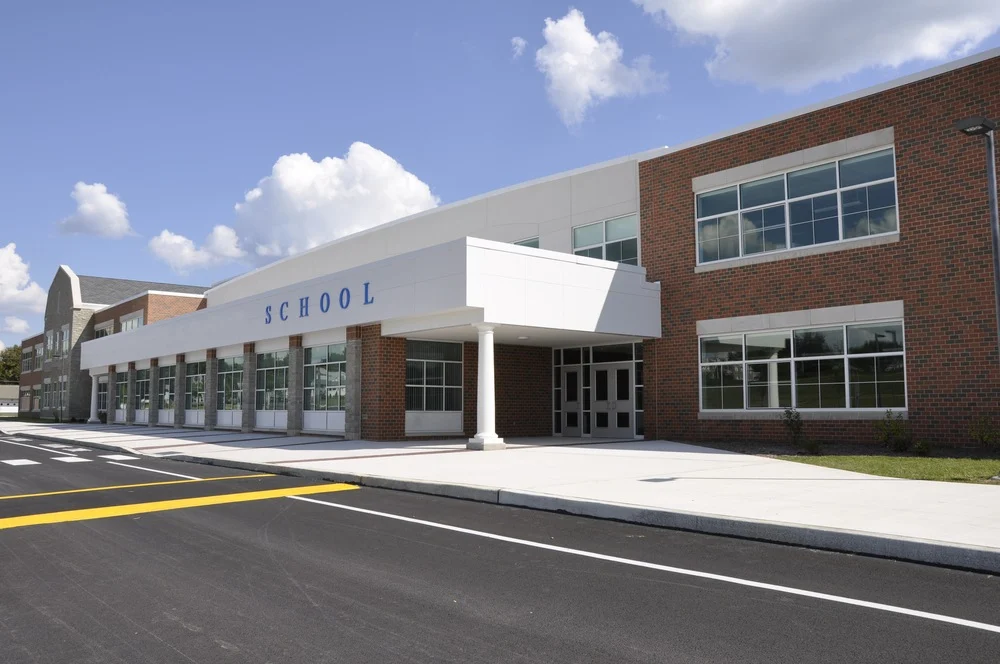
As a utility, one of your key audience segments is school stakeholders – whether that be schools themselves or parents of students. Clean water in schools is a hot topic, and being proactive with your communication approach will build trust with school staff and parents.
Take your cues from your local school district
Not all school districts utilize the same communication strategy – make sure to reach out to your local ISD to understand their specific process for disseminating information. Understand the key groups you’ll need to communicate with – school staff, board members, parent organizations, students, etc. Develop an understanding of the various channels already being used for communication, whether that’s website, email newsletters, parent portals, or social media, and discern what type of content is appropriate for each of those channels. Just as with your own communication strategy, the school likely tailors content by audience and by channel, so partnering with their communication staff to understand where your communication best fits is key.
Know your audience
Ensure that you’re conveying consistent messaging across each group, while also tailoring to the specific needs and questions of each. Be strategic about reaching each particular audience and delivering relevant content to each. Parents are busy, and likely don’t have time to read a lengthy report – don’t overload them with information in a note at pick-up, for example. Instead, ensure that there’s a high-value summary that can be understood at a quick glance, with deeper dives available when and if the parent wants to learn more.
Be Proactive and Transparent
Parents are some of your most valuable customers in your mission to provide safe drinking water. They care deeply about their child’s learning environment, and you have the opportunity to build trust by being consistently proactive and transparent in all your communication with them. Take advantage of what you’ve learned from the school district about how to communicate effectively with parents, and use that knowledge to deliver important content that establishes your utility as a partner in creating a safe learning environment for their child. To read more tips for customer touch points and to check out the rest of the blog posts in the series, check out our full infographic here.
Insights, resources, and tips for water operators
In the last blog, we walked through building your list of schools and child care facilities, which every community water system has to submit by November 1, 2027, regardless of what happens next. This time, we're covering what happens next: waivers, and specifically, how a system might reduce or even eliminate its sampling obligation if it already has something equivalent in place.
Here's what we’ll cover:
- First, why a waiver might matter to you.
- Second, the five conditions that can qualify a program for one.
- Third, how those conditions get applied to your specific system.
- And finally, a timing question that's more important than it looks: who actually approves your waiver, and does that change over time.
Why this matters
If your schools and child care facilities are already being sampled for lead under an existing state or local law or program, you may not need to duplicate that effort under the federal requirement. The Environmental Protection Agency (EPA) built a waiver provision into the rule specifically to avoid making systems run two sampling programs side by side when one would do. The state can exempt your system from the federal sampling requirement for all or a subset of your facilities, provided the existing program is at least as protective as what the Lead and Copper Rule Improvements (LCRI) regulation requires.
One thing that doesn't change no matter what: public education can never be waived. Even with a full sampling waiver, you're still required to provide the annual outreach and education materials to every facility on your list. The waiver only ever applies to the sampling piece.
The five conditions
The EPA's June 2026 checklist lays out five distinct paths to waiver eligibility. Only one needs to be met, not all five, so think of these as five different doors into the same room.
- Condition one: your existing program's sampling frequency and protocol already match the LCRI's requirements exactly.
- Condition two: your program meets the LCRI's frequency requirement and most of the protocol requirement, with the exception of sample size and stagnation time, and it includes at least one remediation action.
- Condition three: your program samples less often than once every five years, but it requires at least one remediation action to make up for the reduced frequency.
- Condition four: the school or child care facility maintains point-of-use devices, certified to reduce lead, on every outlet used for drinking or cooking.
- Condition five: sampling is happening under the Voluntary School and Child Care Lead Testing and Reduction Grant Program, more commonly known as a WIIN grant, and at least the federal minimum number of samples is being collected.
Where remediation is required, it has to be one of three specific actions: disconnecting the affected fixture, replacing it with a certified lead-free fixture, or installing and maintaining an ANSI-certified point-of-use device.
Condition five is probably the one you'll run into most often, since WIIN grant programs already operate in a number of states. But it's worth understanding all five, because a system could have a qualifying local program under any of them and not realize it maps to a federal waiver pathway.
Applying it to your system
Meeting one of the five conditions at the program level is step one. Step two is the EPA's second checklist, which breaks eligibility down to the individual system level across four elements:
- Sampling frequency
- Sample numbers and locations
- Sample collection protocol, and
- Remediation actions, where applicable.
You work through each element and check what applies to your existing program.
A couple of practical notes here. Prior sampling has to have occurred between January 1, 2021 and November 1, 2027 to count toward waiver eligibility; anything sampled before 1/1/2021 doesn't qualify. And waivers can be full or partial. If your system serves 100 facilities and 30 of them were already sampled under a qualifying program, you can request a waiver for those 30 specifically, and continue the standard program for the remaining 70. The waiver is issued to the water system, but it applies facility by facility.
This can sound like a lot of moving parts, and honestly, it is. That's not a knock on the checklist. It's a reflection of how many different ways state and local programs have historically approached lead sampling in schools. If you're finding this genuinely confusing on first read, that's a normal reaction, not a sign you're missing something obvious.
The bottom line
Waivers exist to prevent you from duplicating a sampling effort that's already happening. Five conditions can qualify a program, only one needs to apply. None of this changes the list requirement from the last blog, and none of it touches your public education obligation. The practical next step is to take an honest inventory of any existing state, local, or grant-funded sampling already happening at your facilities, and check it against these five conditions before you assume you're starting the sampling program from zero.
We'll have more on this in an upcoming webinar. For now, this is a good one to bookmark and revisit once your list from the first piece is in hand.
Register for the LCRI School and Childcare Requirements Webinar.
Have questions? Get in touch with the 120Water team here.
We've covered the baseline inventory itself at length in past webinars, and for good reason: it's the first thing due under the Lead and Copper Rule Improvements (LCRI) regulation. But schools and child care facilities are their own piece of this puzzle, with their own deadline, their own definitions, and their own set of resources. The Environmental Protection Agency (EPA) has been building this guidance out in stages, starting with a technical fact sheet back in October 2024 and following up with four new resources this past June.
Here's where we're headed in this one:
- First, a quick reminder of why the EPA is involved in schools and child care facilities at all, because that answer actually shapes a lot of what comes next.
- Second, we'll walk through the two-step process for building your list.
- Third, we'll get into a distinction that trips up a lot of systems: the difference between the lead ban date you already know from your inventory and a separate 2014 standard that applies here.
- And finally, we'll cover where to actually find your facilities and how this list gets maintained over time.
This is the first of two blogs on this topic. The second blog will cover waivers, which is a related but separate conversation worth having on its own.
Why the EPA is involved in schools and child care at all
It's worth clearing this up first, because it explains a lot of the structure that follows. The EPA doesn't actually have the authority to regulate schools and child care facilities directly. Its authority under the Safe Drinking Water Act only extends to public water systems. So the requirements here apply to your community water system, not to the school or child care facility itself. What you're required to do is provide public education and, in many cases, sampling, to the schools and child care facilities you serve.
That distinction matters because it explains why the list requirement exists at all. Before you can educate or sample anyone, you have to know who you serve. That's the whole purpose of this list.
The two-step process
The newest EPA guide on this, released in June 2026, breaks list-building into two steps.
Step one is identifying every school and licensed child care facility your system serves. The EPA's federal definitions are pretty specific here. A child care facility is any location licensed by a state, local, or Tribal agency to provide child care, day care, or early learning services, including Head Start facilities. An elementary school is any school classified as elementary by state and local practice, covering any span of grades up through grade 8. A secondary school picks up from there through grade 12.
You're required to include public and private elementary schools, public and private secondary schools, schools that span both elementary and secondary grades, and licensed child care facilities. You're not required to include post-secondary schools, facilities that are regulated as their own public water system, facilities served solely by private wells, or unlicensed child care facilities.
Step two is figuring out which of those facilities actually need to be sampled versus which ones qualify for an exemption. A facility can be excluded from the sampling list if it meets two conditions at the same time: it was constructed, or had a full plumbing replacement, on or after the state's lead-free standard date, and it is not served by a service line that is lead, Galvanized Requiring Replacement, or unknown material. Both conditions have to be true. If either one isn't, the facility goes on the list.
The distinction that trips people up: lead ban date vs. lead-free standard
This is worth slowing down on, because it's genuinely confusing the first time through, and it's easy to assume it works the same way your inventory does. It doesn't, not exactly.
For the inventory, you've been working with the lead ban date. That's the date, generally somewhere in the mid-to-late 1980s and varying by state, when the federal lead ban took effect. After that date, systems could no longer install lead pipes or use leaded solder, and brass fittings and fixtures were capped at 8% lead. That's the important part.
For the schools and child care list, the relevant date is different: January 1, 2014, the effective date of the Reduction of Lead in Drinking Water Act, unless your state adopted its own earlier lead-free standard. A handful of states did: California and Vermont adopted 1/1/2010, Maryland adopted 1/1/2012, and Louisiana adopted 1/1/2013. Everywhere else, it's January 1, 2014.
Think of it this way. The 1980s lead ban dealt with two of the three sources of lead: the pipe itself and the solder used to join it. What it didn't fully deal with was the brass in fittings and fixtures, which could still legally contain up to 8% lead for another few decades. The 2014 standard is what brought that number down to essentially lead-free, 0.25%. So a building constructed in, say, 1995 could have a fully non-lead service line under the old lead ban standard, and still belong on your schools and child care list, because its fixtures predate the 2014 fixture standard.
That's really the whole reason this list uses a different date than your inventory does. Same underlying concern, lead exposure, but a different regulatory milestone governing it.
Finding your facilities
Once you know what you're looking for, the next question is where to find it. The EPA's companion resource, also released in June 2026, provides a state-by-state directory covering three types of resources for every state and territory: Department of Education public school directories, child care facility licensing agency directories, and Voluntary School and Child Care Lead Testing and Reduction grant agency websites, more commonly known as WIIN grant programs.
A few things worth knowing about using it. Most of these directories are searchable by zip code, but coverage for private schools varies significantly by state, so don't assume a directory that's thorough for public schools will be equally thorough for private ones. For Tribal schools and child care facilities, there isn't a comprehensive national directory. The recommendation here is to contact Tribal governments directly, since the Bureau of Indian Education directory and Head Start center locator only capture a partial picture. And if your state doesn't have its own WIIN grant program, inquiries route directly to your EPA region.
One honest note: it's entirely possible your list won't be complete on the first attempt, especially if the state's own database is missing full addresses or only lists a name and zip code. That's a real limitation, not a sign you did something wrong. The EPA built an annual review process specifically because it expects lists to evolve.
Submitting and maintaining the list
The initial list is due to your state, Tribal, or territorial government by November 1, 2027, alongside your inventory obligations. That date matters enough that it's worth repeating: November 1, 2027 is when this list, along with the rest of your baseline LCRI compliance package, is due.
This is not a submit-it-once-and-forget-it requirement. Starting January 30, 2029, and every year after, systems must certify in an annual report that they made a good faith effort to identify any newly eligible facilities from the previous year. And within five years of the compliance date, by November 1, 2032, and at least once every five years after that, systems must either submit a revised list or certify in writing that nothing has changed.
One point that's easy to miss: this list has to be submitted even if you expect, or eventually receive, a full waiver from the sampling requirement itself. The list and the waiver are two different things. We'll get into how waivers actually work in the next blog.
The bottom line
Building this list is genuinely a two-step process: figure out who you serve, then figure out who's exempt. The lead-free standard date is the piece most likely to catch you off guard if you're used to thinking in terms of the older lead ban date. And the list itself isn't a one-time exercise. Between now and November 1, 2027, the practical next step is straightforward: start pulling together your directory of served schools and child care facilities using your state's resources, understand which ones you can reasonably exclude, and build in the expectation that you'll be revisiting this list on a regular basis going forward.
Read the Next Blog in the Series.
Register for the LCRI School and Childcare Requirements Webinar.

The Lead and Copper Rule Improvements (LCRI) baseline service line inventory deadline is November 1, 2027. For a lot of utilities, the number that matters most right now is how many "unknown" service lines are still sitting on that list.
A recent webinar on verifying those unknowns, presented in partnership with the National Rural Water Association (NRWA), brought in 120Water's Josh Hawley, Director of Water Utility Services, and Maddie Brogan, Director of Client Experience, to walk through the playbook operators are using to close that gap, drawing on real field experience.
Here are some of the highlights, including a case study from Ocean Isle Beach, North Carolina, that showed just how fast that gap can close when the plan is right.
Know Where You Actually Stand
Before any digging happens, the first move is an honest gut check. Pull up whatever you submitted back in 2024 and compare it to what you know today.
Have you logged materials during meter swaps, main breaks, or service line repairs since then? If the answer is "not really," you're not alone.
Most utility teams admit their historical records, as-built maps included, aren't much to work with. Tap cards without any real information on them are common, too.
None of that is anyone's fault. Nobody was keeping these records with this rule in mind, because this rule didn't exist yet.
This just means record keeping starts now, for good. This inventory push is only the first of several LCRI initiatives that will lean on the same data. Whatever you document today pays off again down the road.
Work the Low-Hanging Fruit First
Once you know where you stand, the goal is minimizing how often a shovel actually hits the ground, since that's by far the most expensive way to identify a service line. The playbook starts with the cheapest options and works up from there.
Age reviews and records reviews cost nothing and clear out a chunk of unknowns immediately. Anything built after the lead ban went into effect is done. From there, statistical analysis is the biggest lever for utilities that have already inspected some lines and have reasonable confidence they're a non-lead system.
If field inspections so far show no lead and no galvanized requiring replacement (GRR), a state-approved plan lets you inspect a representative 20% sample of remaining unknowns, spread across build decades and neighborhoods rather than one street. If that pool comes back clean, the other 80% can be classified as non-lead, with a smaller validation sample required down the line to confirm the method held up.
However, if you find any lead or GRR in that sample, the math changes. You can finish the sample pool since you're already out inspecting anyway, but you can no longer classify the rest as non-lead based on an assumption that's now been proven wrong.
That's where predictive modeling takes over. The tool assigns a probability to each remaining line, drawing correlations from everything already in your inventory. It's front-loaded work, with a heavy first-round verification list, but accuracy climbs fast once the model is calibrated. Utilities typically want to see accuracy in the 95% range before relying on it.
Both predictive modeling and statistical analysis vary by state, so check what your regulator accepts before committing to either one.
Decide Who's Doing the Digging
Contractor or in-house isn't just a budget question.
Plumbers are great at plumbing, but that doesn't automatically mean they're equipped to identify buried materials in a way that holds up to state and EPA scrutiny.
Look for a track record with this specific kind of work, and get clear upfront on what support your team needs to provide, from knowing where meter boxes sit to supplying tools. Payment terms matter too: some contractors charge by location, others by the dig, and a statement of work that spells out who handles what gets rid of a lot of confusion later.
If you're keeping the work in-house, the same questions apply: who's trained, who owns resident communication, and who's responsible for restoration once a hole needs to be filled back in.
Get the Field Basics Right
In the field, small habits determine whether a photo actually holds up as documentation.
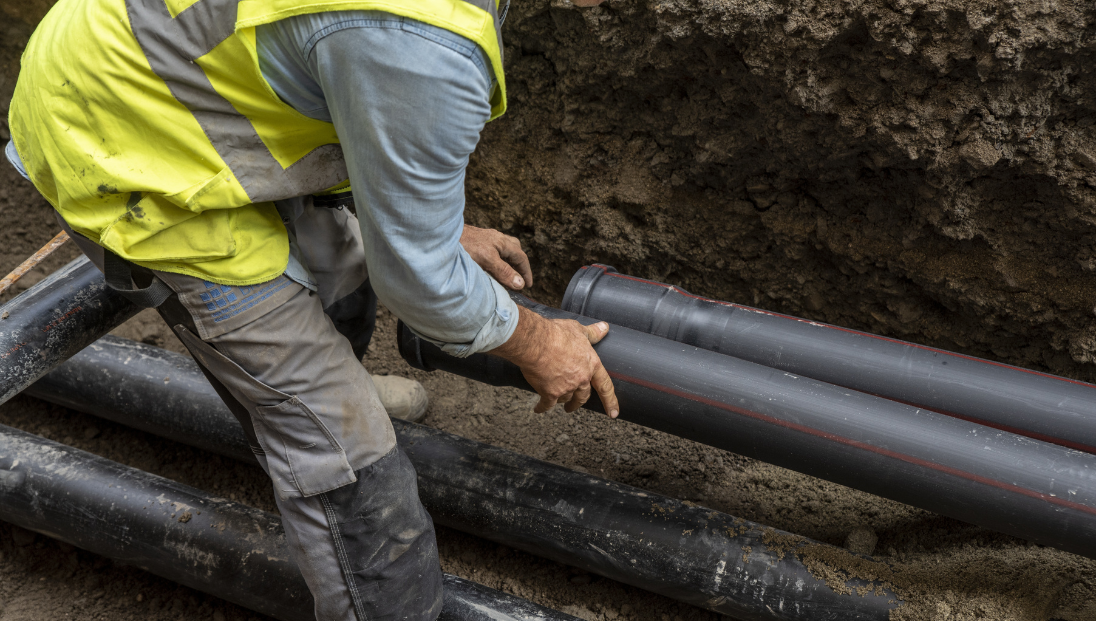
Daylight enough of the pipe to see it clearly, remove debris, and use the flash on your camera even in daylight. Label which side is the system side and which is the customer-owned side. Then, show the scratch or magnet test if one confirmed the material. Document any connectors you run into as well, even though nobody is digging specifically to go find them.
The Payoff
Ocean Isle Beach had 708 unknown service lines and a three-person team, including the superintendent, which made digging that many holes on their own a non-starter.
Because the system had no history of lead or GRR, statistical analysis was the right fit. Their inspection pool dropped to 142 sites, a contracted crew finished the fieldwork in about three days, and the result was zero unknowns remaining.
Not every system will move that quickly, but it's a real example of how much the right method can shrink the workload.
Watch the Full Session
Our full walkthrough goes deeper into validation pools, tricky GRR determinations, and the connector questions utilities are asking most. Watch the complete session to get the full field playbook to ensure you're on track for LCRI compliance.