

Building Your School and Child Care Facility List: What the New EPA Resources Actually Require
School & Facility Sampling
Lead & Copper Rule
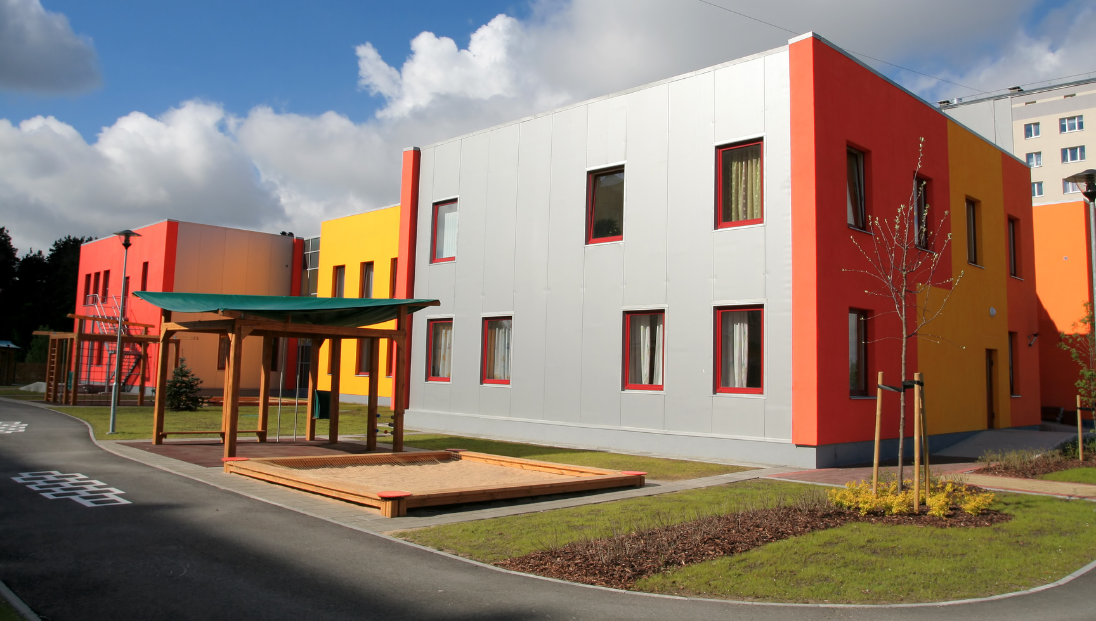
We've covered the baseline inventory itself at length in past webinars, and for good reason: it's the first thing due under the Lead and Copper Rule Improvements (LCRI) regulation. But schools and child care facilities are their own piece of this puzzle, with their own deadline, their own definitions, and their own set of resources. The Environmental Protection Agency (EPA) has been building this guidance out in stages, starting with a technical fact sheet back in October 2024 and following up with four new resources this past June.
Here's where we're headed in this one:
- First, a quick reminder of why the EPA is involved in schools and child care facilities at all, because that answer actually shapes a lot of what comes next.
- Second, we'll walk through the two-step process for building your list.
- Third, we'll get into a distinction that trips up a lot of systems: the difference between the lead ban date you already know from your inventory and a separate 2014 standard that applies here.
- And finally, we'll cover where to actually find your facilities and how this list gets maintained over time.
This is the first of two blogs on this topic. The second blog will cover waivers, which is a related but separate conversation worth having on its own.
Why the EPA is involved in schools and child care at all
It's worth clearing this up first, because it explains a lot of the structure that follows. The EPA doesn't actually have the authority to regulate schools and child care facilities directly. Its authority under the Safe Drinking Water Act only extends to public water systems. So the requirements here apply to your community water system, not to the school or child care facility itself. What you're required to do is provide public education and, in many cases, sampling, to the schools and child care facilities you serve.
That distinction matters because it explains why the list requirement exists at all. Before you can educate or sample anyone, you have to know who you serve. That's the whole purpose of this list.
The two-step process
The newest EPA guide on this, released in June 2026, breaks list-building into two steps.
Step one is identifying every school and licensed child care facility your system serves. The EPA's federal definitions are pretty specific here. A child care facility is any location licensed by a state, local, or Tribal agency to provide child care, day care, or early learning services, including Head Start facilities. An elementary school is any school classified as elementary by state and local practice, covering any span of grades up through grade 8. A secondary school picks up from there through grade 12.
You're required to include public and private elementary schools, public and private secondary schools, schools that span both elementary and secondary grades, and licensed child care facilities. You're not required to include post-secondary schools, facilities that are regulated as their own public water system, facilities served solely by private wells, or unlicensed child care facilities.
Step two is figuring out which of those facilities actually need to be sampled versus which ones qualify for an exemption. A facility can be excluded from the sampling list if it meets two conditions at the same time: it was constructed, or had a full plumbing replacement, on or after the state's lead-free standard date, and it is not served by a service line that is lead, Galvanized Requiring Replacement, or unknown material. Both conditions have to be true. If either one isn't, the facility goes on the list.
The distinction that trips people up: lead ban date vs. lead-free standard
This is worth slowing down on, because it's genuinely confusing the first time through, and it's easy to assume it works the same way your inventory does. It doesn't, not exactly.
For the inventory, you've been working with the lead ban date. That's the date, generally somewhere in the mid-to-late 1980s and varying by state, when the federal lead ban took effect. After that date, systems could no longer install lead pipes or use leaded solder, and brass fittings and fixtures were capped at 8% lead. That's the important part.
For the schools and child care list, the relevant date is different: January 1, 2014, the effective date of the Reduction of Lead in Drinking Water Act, unless your state adopted its own earlier lead-free standard. A handful of states did: California and Vermont adopted 1/1/2010, Maryland adopted 1/1/2012, and Louisiana adopted 1/1/2013. Everywhere else, it's January 1, 2014.
Think of it this way. The 1980s lead ban dealt with two of the three sources of lead: the pipe itself and the solder used to join it. What it didn't fully deal with was the brass in fittings and fixtures, which could still legally contain up to 8% lead for another few decades. The 2014 standard is what brought that number down to essentially lead-free, 0.25%. So a building constructed in, say, 1995 could have a fully non-lead service line under the old lead ban standard, and still belong on your schools and child care list, because its fixtures predate the 2014 fixture standard.
That's really the whole reason this list uses a different date than your inventory does. Same underlying concern, lead exposure, but a different regulatory milestone governing it.
Finding your facilities
Once you know what you're looking for, the next question is where to find it. The EPA's companion resource, also released in June 2026, provides a state-by-state directory covering three types of resources for every state and territory: Department of Education public school directories, child care facility licensing agency directories, and Voluntary School and Child Care Lead Testing and Reduction grant agency websites, more commonly known as WIIN grant programs.
A few things worth knowing about using it. Most of these directories are searchable by zip code, but coverage for private schools varies significantly by state, so don't assume a directory that's thorough for public schools will be equally thorough for private ones. For Tribal schools and child care facilities, there isn't a comprehensive national directory. The recommendation here is to contact Tribal governments directly, since the Bureau of Indian Education directory and Head Start center locator only capture a partial picture. And if your state doesn't have its own WIIN grant program, inquiries route directly to your EPA region.
One honest note: it's entirely possible your list won't be complete on the first attempt, especially if the state's own database is missing full addresses or only lists a name and zip code. That's a real limitation, not a sign you did something wrong. The EPA built an annual review process specifically because it expects lists to evolve.
Submitting and maintaining the list
The initial list is due to your state, Tribal, or territorial government by November 1, 2027, alongside your inventory obligations. That date matters enough that it's worth repeating: November 1, 2027 is when this list, along with the rest of your baseline LCRI compliance package, is due.
This is not a submit-it-once-and-forget-it requirement. Starting January 30, 2029, and every year after, systems must certify in an annual report that they made a good faith effort to identify any newly eligible facilities from the previous year. And within five years of the compliance date, by November 1, 2032, and at least once every five years after that, systems must either submit a revised list or certify in writing that nothing has changed.
One point that's easy to miss: this list has to be submitted even if you expect, or eventually receive, a full waiver from the sampling requirement itself. The list and the waiver are two different things. We'll get into how waivers actually work in the next blog.
The bottom line
Building this list is genuinely a two-step process: figure out who you serve, then figure out who's exempt. The lead-free standard date is the piece most likely to catch you off guard if you're used to thinking in terms of the older lead ban date. And the list itself isn't a one-time exercise. Between now and November 1, 2027, the practical next step is straightforward: start pulling together your directory of served schools and child care facilities using your state's resources, understand which ones you can reasonably exclude, and build in the expectation that you'll be revisiting this list on a regular basis going forward.
Read the Next Blog in the Series.
Register for the LCRI School and Childcare Requirements Webinar.
.png)
.png)
.png)