
Make More Sense of Your Data Using 120Water’s Saved Views & Team Views
Data Management & Reporting
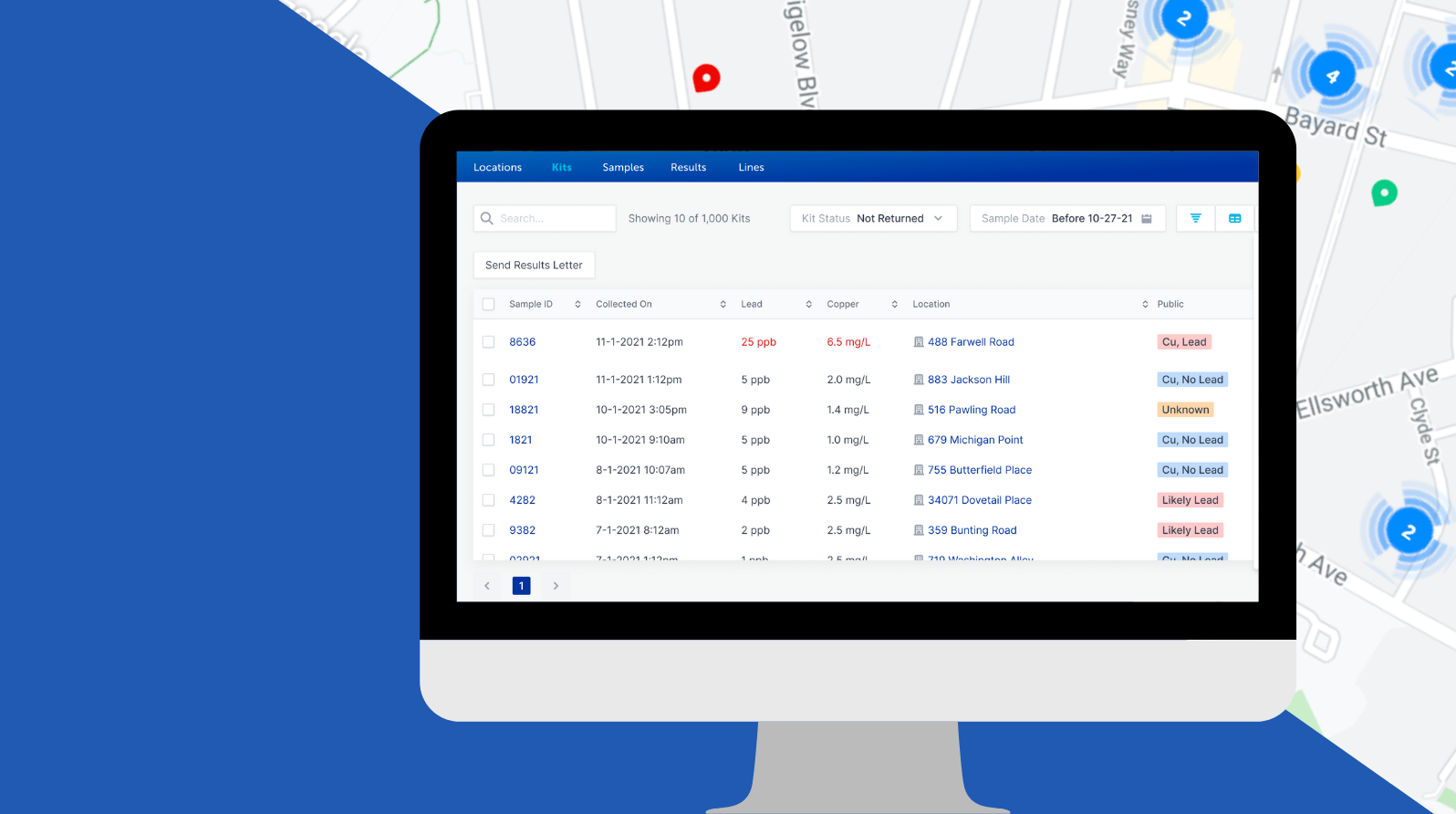
From protecting public health to keeping their communities informed — and everything in between — water quality professionals today have a huge responsibility on their shoulders. And what comes with that important work? Massive amounts of data. At 120Water, we run programs for Lead Service Line Inventory (LSLI) development, Lead and Copper Rule (LCR) compliance sampling, consumer request sampling, pitcher filter distribution, school and childcare sampling, and more. Running all these programs requires many different data types, including (but not limited to):
- Location records
- Contact records
- Asset data
- Lab data
- GIS data
- Tax parcel information
- Digitized Tap Cards
Big data such as this is unhelpful and overwhelming without the ability to properly analyze and make sense of it. Sifting through data that lives in a bunch of different places and in different formats is frustrating and wastes a lot of valuable time. Long lists of CSVs or complicated shapefiles will do nothing to help you achieve your goals if you can’t take action on the data. (It’s like trying to solve a math problem when you don’t know the order of the numbers.)
Data management on your terms
120Water customers have the power to organize, save, and take action on their data using the format required by their primacy agency. They don’t have to worry about missing essential criteria from their reporting requirements. Our solution allows you to manage your events and automate workflows all in one place, and makes your program and customer data more organized, accessible, and actionable. With new features like Saved Views and Team Views, you gain even more efficiency to align your stakeholders and speed up the progress of your programs.
Saved Views
With Saved Views, 120Water customers have the power to create and save any view (including custom fields) for every data table. You can also make state/primary agency reporting easier by matching the format of your state requirements.
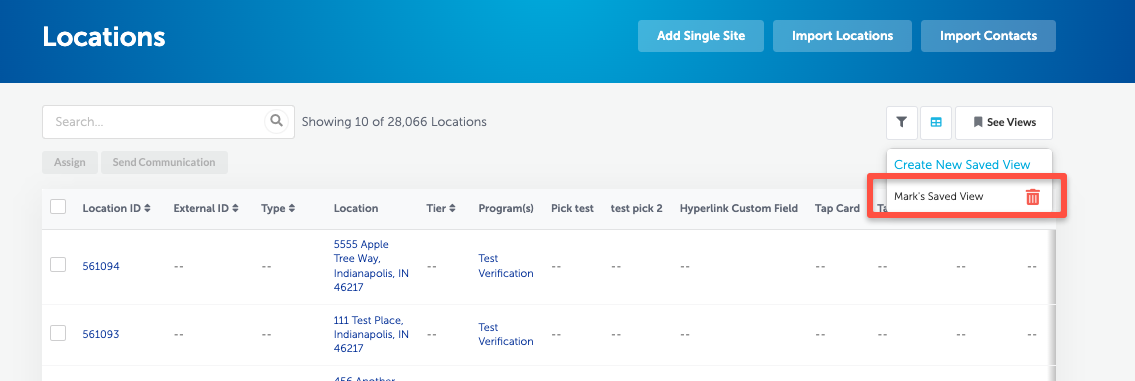
With Saved Views, you can create, name, and save any view you need for as long as you need it. For example, if your state or primacy agency provides a spreadsheet template, you can match your views to that existing sheet or reporting requirements. Setting the filters that make the most sense for you and your team will improve your efficiency and save you countless hours.
Team Views
With Team Views, you can save and share views across your team, so you’re all on the same page about how you view and work with your data. Team Views can be accessed by anyone on the team who has access to the 120Water platform, which helps break down silos and makes collaboration easier.
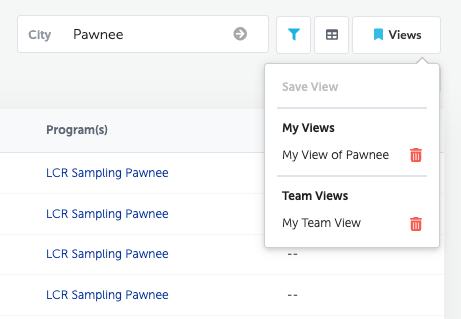
Seeing the same information all in one place and knowing when something is updated allows everyone involved to take action in the most efficient and organized way. Alignment is critical when it comes to large-scale programs like LCRR. With Team Views, all teams and external stakeholders have access to multiple saved views of every type of data, from inventory development to communications to sampling, reporting, and beyond. This helps get everyone aligned and keeps time-sensitive work on track.
Book an LCRR planning session
Still trying to make sense of LCRR and figure out how to prioritize next steps? The 120Water team is providing 30-minute planning sessions to help water systems assess their LCRR readiness and answer questions about the implementation of the new rule. Book your 1:1 session and get your self-assessment >

Insights, resources, and tips for water operators
The Lead and Copper Rule Improvements (LCRI) require every community water system to submit a baseline service line inventory by November 1, 2027. Systems with lead, GRR, or unknown lines also need a replacement plan. Your utility leads the technical work. As the city manager, you keep the council informed, bring departments together, and help residents understand what's happening. In smaller towns, you may take on a share of the office work, too.
What is the LCRI?
The EPA published the LCRI in October 2024. It builds on the Lead and Copper Rule Revisions (LCRR), which required an initial service line inventory by October 16, 2024. Under the LCRI, that inventory becomes the starting point for replacing lead pipes.
This project is bigger than most cities expect. It covers every service line in town, on both the city's side and the resident's side. It pulls in several departments and plenty of front yards. Cities that do well line up three things early: the right team, enough time, and the right technology.
What's due on November 1, 2027?
November 1, 2027 is the LCRI's main compliance date. Four requirements start that day.
- Baseline inventory: A record of every service line and connector, public and private side, sent to your state.
- Replacement plan: Required if any lines are lead, galvanized requiring replacement (GRR), or unknown.
- Replacement program: Most systems must replace all lead and GRR lines under their control within 10 years.
- Schools and child care list: Community water systems submit a list of the schools and child care facilities they serve.
After that, the inventory gets updated every year, and residents served by lead, GRR, or unknown lines get notified. Dates can shift with federal or state updates, so check with your utility and state agency for the latest.
What does a city manager do during the LCRI?
Pulling the right team together usually falls to the city manager. What that looks like depends on the size of your system. For a broader look, the National League of Cities has an overview of the LCRI for local governments.
| Area | Mid-to-Large Systems | Small and Very Small Systems |
|---|---|---|
| Your main role | Connecting council, residents, and departments | Hands-on office support |
| Council | Brief council on timeline, costs, and resident impact | Keep council updated as the work moves |
| Residents | Answer calls about crews in yards | Post updates on social media and city channels |
| Records | Utility staff manage the data | Enter and organize records, like old tap cards and survey responses |
| Your time | Part of your regular duties | Often alongside another full-time job |
Mid-to-large systems: you coordinate
Your utility handles the fieldwork and data. Before each phase, they'll meet with you so you know what's coming and can share it with the council.
Residents may call city hall when a crew shows up to check a meter in their yard. You'll know why the crew is there and what to tell them.
You're also the bridge between departments that don't always work together. Finance needs to plan for costs and funding. IT needs to weigh in on data systems. Planning will help shape replacement programs. Bring them in early so no one is surprised.
Small and very small systems: you're part of the crew
You won't be out in the field, but expect a share of the office work. That can mean posting updates, entering records, and handling the paperwork that keeps the project moving. Many small-town city managers do this alongside another full-time job, so every hour saved matters. The EPA also offers free Water Technical Assistance to help communities plan projects and apply for funding.
Why should city managers push for digital tools?
Records for every service line, years of annual updates, and notices to residents add up fast. Spreadsheets and paper files make every step slower and harder to check.
A purpose-built platform keeps it all in one place:
- Less manual work. Records, field data, and resident responses flow into one system.
- Stronger security. 120Water has submitted for GovRAMP authorization, and its auditor has recommended approval.
- Ready for reporting. State submissions and annual updates come from the same data your staff already maintains.
Trying something new can feel risky in local government. As city manager, the decision is yours. When you choose a better tool, your staff get hours back.
How can city managers build community trust?
Your residents are your neighbors, and you may be one of them. They want to know what's under their yard and what the city is doing about it. Trust comes from steady, open updates and clear steps they can take. It matters most when replacing the resident's side of a line needs their permission. The EPA's tips on service line replacement access walk through how that works.
120Water helps cities handle the resident side of the project:
- Required notices to residents served by lead, GRR, or unknown lines
- Online surveys where residents report their service line material
- One secure platform for inventory and replacement data
- A public transparency dashboard where residents look up their own address and see your progress
When council or a reporter asks, you can point to a city that started early and kept residents informed. For more ideas, watch the 120Water webinar Before They Ask: Building Community Trust Ahead of LCRI.
Where should a city manager start?
You don't need every answer to begin. Start somewhere, then adjust as you learn. These four steps are a good first move:
- Ask your utility director where your service line inventory stands today.
- Put the LCRI on a council agenda well before November 1, 2027.
- Name a contact in Finance, IT, and Planning.
- Give front-desk staff a short script for resident questions.
Frequently Asked Questions
Does the LCRI apply to small towns?
Yes. The LCRI applies to every community water system, no matter its size.
Does the inventory include the resident's side of the service line?
Yes. The baseline inventory covers both the public and private portions of each service line.
How long do cities have to replace lead pipes?
Most systems have 10 years from November 1, 2027 (technically until December 31, 2037) to replace all lead and GRR service lines under their control. Some systems may qualify for a longer timeline under limited conditions.
How is the LCRI different from the LCRR?
The LCRR required an initial service line inventory by October 16, 2024. The LCRI builds on that work with a baseline inventory, a replacement plan, and a 10-year replacement requirement.
Do residents have to be notified?
Yes. Residents served by lead, GRR, or unknown service lines must be notified every year.
Get your city ready
Want more detail first? Watch the 120Water webinar replay, LCRI in Practice: The Deadlines, the Cadence, and What Applies to You. Then talk with 120Water about your city's LCRI plan: https://www.120water.com/contact
UCMR 6 is the EPA's sixth Unregulated Contaminant Monitoring Rule. Proposed July 1, 2026, it would require public water systems to sample for 30 unregulated contaminants, including seven ultrashort fluorinated compounds, during a 12-month window between 2028 and 2030.
What is UCMR 6?
UCMR 6 is the sixth cycle of the EPA's Unregulated Contaminant Monitoring Rule. The Safe Drinking Water Act requires the EPA to issue a new list of unregulated contaminants for public water systems to monitor once every five years.
UCMR collects data. It does not set limits. The contaminants on the list have no federal health-based drinking water standard yet. The EPA uses the results to decide whether a contaminant appears often enough, and at high enough levels, to justify future regulation.
Many UCMR contaminants come from the EPA's Contaminant Candidate List (CCL). When the EPA flags a contaminant on the CCL but lacks enough national occurrence data to make a regulatory call, UCMR is how it gets that data.
When does UCMR 6 take effect?
UCMR 6 is still a proposal. Here is the expected timeline based on the EPA's proposed implementation schedule.
| When | What Happens |
|---|---|
| July 1, 2026 | The EPA publishes the UCMR 6 proposal. Public comment closed August 31, 2026. |
| Late 2026 to 2027 | The EPA finalizes the rule. The EPA's own target is late 2026. |
| 2027 | Pre-monitoring: lab approvals, system registration in SDWARS (due December 31, 2027) and scheduling, state monitoring plans, and EPA training webinars. |
| 2028 to 2030 | Sampling. Each participating system monitors during one 12-month period. |
| 2031 | Final sampling and data reporting wrap up. |
Which water systems have to sample for UCMR 6?
UCMR 6 applies to community water systems (CWSs) and non-transient non-community water systems (NTNCWSs). Participation depends on the population served.
| System Size (People Served) | Who Samples | Estimated Systems | Who Pays for Lab Analysis |
|---|---|---|---|
| Fewer than 3,300 | 800 randomly selected systems | 800 | The EPA |
| 3,300 to 10,000 | All systems* | 5,155 | The EPA |
| More than 10,000 | All systems | 4,599 | The water system |
Monitoring by systems serving 3,300 to 10,000 people depends on the EPA receiving annual appropriations and having enough lab capacity. If funding falls short in a given year, fewer small systems will sample.
The EPA will confirm which small systems sample about six months ahead, by July 1 of the year before sampling.
What contaminants are on the UCMR 6 list?
The EPA proposed 30 contaminants across five categories. Your lab will run four EPA analytical methods to cover them.
| Category | Count | Examples |
|---|---|---|
| Ultrashort organofluorine compounds (four are PFAS) | 7 | Trifluoroacetic acid (TFA), PFPrA, PFEtS |
| Pesticides | 8 | DEET, chlorothalonil, trifluralin |
| Pesticide metabolites | 3 | Chlorpyrifos oxon, phorate sulfone |
| Solvents and chemical intermediates | 10 | 1,2,3-trichloropropane, naphthalene, pyrene |
| Explosives and related compounds | 2 | 2,4-dinitrotoluene, 2,6-dinitrotoluene |
Four of the seven ultrashort organofluorine compounds are PFAS. The other three, including TFA, are breakdown products of fluorinated pesticides, pharmaceuticals, and battery electrolytes. All seven persist in the environment and move easily through water. They need their own test method (EPA Method 563).
The full proposed list, with minimum reporting levels, is on the EPA's UCMR 6 page.
How does UCMR 6 sampling work?
Under the proposal, samples are collected at each non-emergency entry point to the distribution system (EPTDS). How often you sample depends on your source water.
- Surface water systems (including ground water under the direct influence of surface water) sample 4 times during their monitoring year.
- Ground water systems sample 2 times during their monitoring year.
All samples must be analyzed by an EPA-approved UCMR laboratory. The EPA runs a separate lab approval program for each UCMR cycle, so check that your lab is approved for UCMR 6 before you schedule anything.
Large systems choose and pay for their own lab. Small systems don't pick one: the EPA ships them sampling kits with prepaid labels and handles analysis through its contracted labs.
Where do UCMR 6 results go?
UCMR results go into SDWARS, the EPA's system built for UCMR data submission and review. SDWARS is separate from SDWIS.
- Your EPA-approved lab posts results to SDWARS within 90 days of sample collection.
- Large systems have 30 days to review and approve their results. If you take no action, the data is treated as approved. The EPA reviews results for small systems.
- The EPA publishes the data publicly on a quarterly basis through the UCMR Data Finder and the National Contaminant Occurrence Database.
Community water systems must also report detected UCMR results in their Consumer Confidence Report (CCR). A detection means any result at or above the EPA's minimum reporting level (MRL). The MRL is the lowest level labs can reliably measure, set without reference to health effects.
What should your water system do now?
Sampling is more than a year away. A few steps now will save you scrambling later.
- Confirm whether you're in. Check your population served. If you serve 3,300 or more people, plan on sampling.
- Count your entry points. Your number of entry points and your source water type set your sample count. Contact and sampling location info is due in SDWARS by December 31, 2027.
- Large systems, talk to your lab. Ask whether they plan to seek UCMR 6 approval for all four methods. The EPA has named lab capacity as a limit on how many small systems can sample.
- Budget if you're large. Systems serving more than 10,000 people pay for their own analysis and shipping.
- Plan your CCR language. Detected results will show up in your CCR. Residents will ask questions, especially about PFAS.
- Watch for the final rule. Contaminants, MRLs, and timelines can change between the proposal and the final rule.
How does UCMR 6 fit into the rest of your sampling program?
UCMR 6 stacks on top of everything you already sample for: LCR and LCRI, PFAS, disinfection byproducts, bacteriological monitoring, and state-specific requirements.
That matters because roughly 75% of drinking water violations come from missed or late samples. More contaminants, more entry points, and another reporting system all add more chances for something to slip.
This is where a centralized schedule earns its keep. 120Water's Water Quality module (formerly Sample Manager) keeps sampling schedules, task ownership, results, and reporting in one place. When the EPA finalizes the UCMR 6 list, 120Water plans to load the contaminants and minimum reporting levels into Water Quality. Your team can then see UCMR 6 alongside every other requirement on the calendar.
Want to see how other systems are organizing their sampling calendars? Talk to our team.
Frequently Asked Questions About UCMR 6
What does UCMR stand for?
UCMR stands for Unregulated Contaminant Monitoring Rule. It is a rule from the EPA that requires public water systems to collect data on contaminants that do not yet have federal drinking water standards.
Is UCMR 6 final?
No. The EPA proposed UCMR 6 on July 1, 2026. The final rule is expected in late 2026 or 2027, and sampling is expected to run from 2028 through 2030.
Does my small water system have to sample for UCMR 6?
Systems serving 3,300 to 10,000 people are expected to sample, depending on funding from the EPA and lab capacity. Only about 800 systems serving fewer than 3,300 people will be randomly selected. The EPA pays lab and shipping costs for all systems serving 10,000 or fewer people.
Does UCMR 6 include PFAS?
Yes. UCMR 6 proposes monitoring for seven ultrashort organofluorine compounds. Four are PFAS, including perfluoropropanoic acid (PFPrA). The other three, including trifluoroacetic acid (TFA), are breakdown products of other fluorinated chemicals.
Do UCMR 6 results have to be shared with customers?
Yes. Community water systems must report UCMR results at or above the minimum reporting level in their annual Consumer Confidence Report.
Every address served by a lead, galvanized requiring replacement (GRR), or unknown service line needs a notice before December 31, 2026. For many systems, this is round three. That should make it easier. It also raises the stakes a little, because residents have seen one of these letters before, and some of them still have questions nobody answered.
In 120Water's webinar on building community trust ahead of the Lead and Copper Rule Improvements (LCRI), Isaac Pellerin, SVP of Corporate Strategy, argued that the utilities that come out ahead treat notification requirements as a starting point. The requirement itself is simple. Sending a letter that moves residents to a next step takes more planning.
The Requirement in Plain Terms
First, a common mix-up: your 2026 notices fall under the Lead and Copper Rule Revisions (LCRR), not the LCRI. Annual notification has been required under the LCRR since October 16, 2024, and the EPA kept that requirement in place when it finalized the LCRI. The LCRI brings its own notification rules, but those don't start until its compliance date.
Who gets a notice. Anyone served by a lead, GRR, or unknown service line. Yes, unknown counts. New customers at one of those addresses also get a notice when service starts.
What it has to say. Every notice states the service line's classification (for unknowns, that the material is unknown but may be lead), includes the required lead health effects language, and lists steps people can take to reduce their exposure. The last piece changes by classification:
- Lead lines need information on replacement opportunities and programs that help finance replacement.
- GRR lines need information on replacement opportunities and programs that help finance replacement.
- Unknown lines need information on how the material can be verified.
How to send it. By mail, or by another method your primacy agency approves.
What comes after. Notices go out every year, and the state certification covers the full calendar year. That's why 2026 letters need to reach residents by December 31. By July 1, 2027, you certify to your state that the notices went out and include a copy of what you sent. Skip that step and you're looking at a Tier 2 public notice, which is a much less fun letter to write.
Templates. The EPA provides three templates, one per classification, in English and Spanish. Some states require their own templates or specific language, so check with your primacy agency before you print anything.
Answer Their Questions Before They Ask
When a resident opens this letter, they want to know three things. Is my water safe to drink today? What is my utility doing about lead? Why did I get this? The required language covers the regulatory facts. It wasn't written for someone reading at the kitchen table after a long shift.
Nothing stops you from adding a plain-language cover note or a short FAQ alongside the required content. The systems that handle this well have their answers ready before the letter lands, so the first thing a resident reads is a clear next step.
Unknown lines deserve extra care. To most homeowners, "unknown" sounds a lot like "lead," even when it turns out not to be. Give those residents a way to help close the gap: share records they might have, check the pipe where it enters the home, or schedule a visit.
Remember who else will field these questions. Many water and wastewater personnel work in field operations. When someone sees a crew on their street a week after the letter arrives, that crew becomes your communications channel. A few talking points and a website to point people toward will cover most conversations.
Finally, point the letter somewhere useful. Systems serving more than 50,000 people must post their inventory online, and it's a smart move for everyone else. A searchable map gives residents a place to look up their own address instead of calling the front desk.
Get the Logistics Right
When it comes to communications, most of our webinar attendees were in decent shape. Roughly 40% had already started sending letters, and close to half had a plan ready but hadn't hit send yet. If you're in either group, these practices will keep the next few months calm.
Prep early. Address cleanup and list segmentation take longer than anyone budgets for. Lock in your content, mailing lists, internal sign-off, and staff FAQs before a single letter prints.
Batch by material type. Three classifications means three letters. Sending them in separate batches keeps the content accurate and makes follow-up calls easier for your customer care team, since they'll know which letter the caller is holding.
Send before the holidays. USPS slows down in December, and every batch of notices brings a wave of calls. Mailing in October or November spreads that volume out. Nobody wants to explain service line classifications on December 23.
Keep the paper trail. Record what went to which address and when. Come July 1, that record makes certification a quick job.
120Water's platform can handle most of this work. It filters affected customers by classification, applies EPA or state-approved templates, prints and mails through local mail houses, and tracks every notice so the audit trail builds itself.
Quick Answers to Common Questions
If a line is classified as unknown, does that resident still need a notice? Yes. Unknown lines require an annual notice, just like lead and GRR lines. Use the letter to start the work of identifying the material.
Can we write our own letter instead of using a template? You can adapt the language, as long as every required element is there. Check your state's rules first, since some primacy agencies require their own templates or wording.
When can we stop sending notices to an address? Once the entire service line, on both the utility and customer sides, is no longer lead, GRR, or unknown.
Are notices required as part of the LCRI? Yes, and the compliance date is December 1, 2027 (thirty days after the baseline inventory deadline of 11/1/27)
Watch the Full Session
Notices are only one piece of a community engagement strategy. The full webinar goes further: how utilities are partnering with local organizations to reach residents, how to stay transparent when the news isn't good, and why celebrating milestones matters more than most systems think.
If you missed it, watch the recording and grab our LCRR Annual Notification Checklist to keep your team on track through December.

.png)
.png)