

Celebrating Our Customers: 120Water Clients Honored by the LSLR Collaborative
LSL Replacement
Lead & Copper Rule
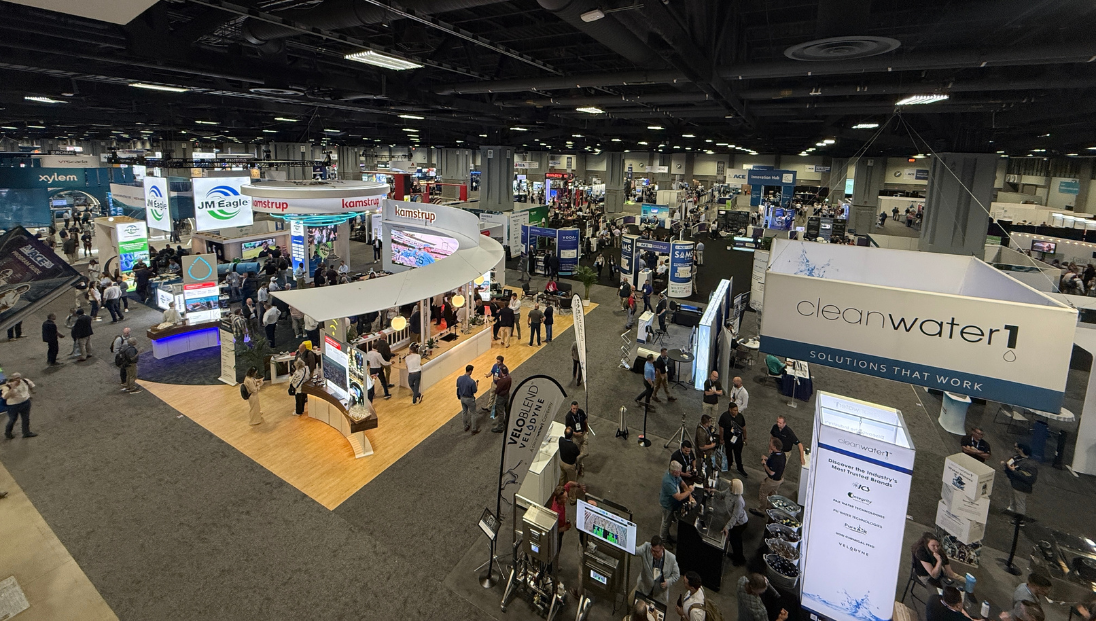
The Lead Service Line Replacement Collaborative (LSLR Collaborative) marked its 10th anniversary by recognizing 16 people and programs for excellence in lead service line replacement, timed alongside the American Water Works Association's 2026 ACE Conference. The awards spanned categories from technical efficiency and fiscal savvy to community engagement and equitable access, spotlighting the utilities and individuals working to remove lead service lines from water systems nationwide and reduce the health risks of lead exposure. See the full list of honorees.
With more than 4 million lead service lines still connected to water systems across the country, this kind of utility-led work matters. We couldn't be prouder that three 120Water customers were among this year's honorees:
- Denver Water's Lead Reduction Program: Outstanding Leadership in LSL Replacement
- Lead Protection Program, Greeley, Colorado: Excellence in Community Engagement
- Wilmington Water Lead Reduction Program: Fiscal Savvy and Funding Innovation
120Water is proud to support this work as our customers advance LCRI compliance and lead reduction programs in their communities. Here's a closer look at what makes each of these programs stand out.
_____________________________________________________________________________
Denver
Denver Water's Lead Reduction Program won Outstanding Leadership in LSL Replacement, with the utility recognized across multiple award categories this year, reflecting the program's broad, sustained impact on lead service line replacement across the Denver metro area. EquiFlow Lead-Free Program in Wausau, WI, and Lead Free DC were also honored alongside Denver in this year's ceremony.
Choosing a Different Path
In 2018, Denver Water had a decision to make. The standard path under the EPA's Lead and Copper Rule was to add orthophosphate to the water supply, a corrosion inhibitor that coats pipes to keep lead from leaching in. But orthophosphate carries its own environmental cost: elevated phosphate levels downstream can contribute to nutrient pollution and algal blooms. Denver Water proposed something different instead, requesting an EPA variance to pursue a plan built around accelerated lead service line replacement, free filter distribution, and water chemistry adjustments that addressed the source of the problem directly rather than treating around it. That plan became the Lead Reduction Program, launched in 2020.
Replacing Lines at No Cost to Customers
Denver Water is replacing an estimated 60,000 to 64,000 lead service lines with copper by 2034, at no direct cost to customers. The utility prioritizes critical facilities like schools and childcare centers, along with underserved communities, and uses a mix of property records, water testing, and visual inspection to identify which lines need to come out. A predictive model built on pipe and water quality data helps the team focus resources on the highest-risk areas first. For property owners who'd rather handle replacement independently, Denver Water offers a one-time reimbursement of $3,800, about half of what the utility spends per line.
Protecting Residents in the Meantime
Replacing tens of thousands of service lines takes years, so Denver Water built in a bridge: free, certified water pitcher filters for every customer with a known or suspected lead service line. Residents are asked to use filtered water for drinking, cooking, and infant formula until six months after their line is replaced, and the utility tracks actual filter adoption through biannual surveys to make sure the safeguard is actually being used, not just handed out.
Funding the Work
Denver Water financed the program initially through water rates, bonds, and hydropower revenue, then landed a major boost in December 2022: $76 million in federal funding through the Bipartisan Infrastructure Law, structured as a low-interest loan from the Colorado Drinking Water State Revolving Fund with $40 million forgiven outright. That funding let the utility accelerate its pace of replacements considerably.
Built on Communication and Continuous improvement
All outreach, from advance letters before filter distribution to campaign materials, goes out in both English and Spanish, with consistent branding so residents recognize official communications. Denver Water has also refined the program over time, adding a step where residents receive lead testing kits five to six months after replacement to confirm their line is truly lead-free, and building partnerships with local organizations to reach diverse communities more effectively. That combination of an ambitious replacement timeline, a real safety net for residents in the meantime, and the funding and follow-through to back it all up is what earned Denver Water recognition for outstanding leadership across the LSLR Collaborative's categories.
"It takes a community working together to tackle the legacy of LSLs [...] The goal of our program was to do the right thing, and we're excited to be part of the national movement working – together as one – toward a lead-free future." — Alexis Woodrow, Denver Water's manager for the Lead Reduction Program
_____________________________________________________________________________
Greeley
Greeley, Colorado's Lead Protection Program won Excellence in Community Engagement, recognizing programs that involve diverse stakeholders in program design, use creative communication channels to reach residents, and maintain feedback mechanisms that shape ongoing improvements. Grand Rapids Water System's Lead Line Replacement Program and Lead Free Memphis were also recognized in this category.
A City Built on Trust
Incorporated in 1886, Greeley serves roughly 130,000 residents through about 29,000 service connections, in a system with known lead service line installations dating back to the 1880s and 1920s. When the city launched its Lead Protection Program in 2022, it faced a common challenge: a large number of unknown service lines on both the public and private side.
From the start, Greeley built the program around trust. The team met early with community ambassadors, trusted representatives across Greeley's neighborhoods, to gather feedback on the program itself. One theme surfaced quickly: many residents were wary of city government and hesitant to let officials onto their property. That insight shaped the program from day one, with trust becoming a cornerstone of everything that followed. Greeley also leaned on familiar faces within the community, including team member and lifelong Greeley resident Fred Rodriguez, who residents often meet directly during identification and replacement work.
Communicating With Everyone, in Their Own Language
Greeley's communication strategy rests on four pillars: accessibility, consistency, diversity, and trust. The team developed consistent campaign branding so residents could easily recognize official program messaging, and wrote all materials at an eighth-grade reading level for broad accessibility. Greeley's population is nearly 40% Hispanic, and 23% of residents speak only Spanish, so the team made every communication channel available in Spanish, with bilingual staff able to answer technical questions in residents' native language.
Listening, Then Adjusting
Greeley built multiple ways for residents to shape the program. After learning that some elderly residents faced barriers completing the city's self-service line material survey, the team brought on a contractor to conduct in-home identification visits. Residents can also share feedback through the city's "Speak Up Greeley" public engagement page, as well as post-replacement surveys distributed alongside water test kits and flushing instructions.
The Results
Greeley has identified 510 lines needing replacement and completed 207 replacements to date, with a 99% consent form return rate from property owners for private-side replacements. That return rate is a strong signal that residents trust the program enough to let crews onto their property, and it's the clearest proof point behind Greeley's win for Excellence in Community Engagement.
"This return rate suggests the success of our program in creating trust and allowing for those replacements to occur even on the private side of the property line." — Michaela Jackson, Water Quality and Regulatory Compliance Manager, City of Greeley Lead Protection Program
_____________________________________________________________________________
Wilmington
The Wilmington Water Lead Reduction Program won Fiscal Savvy and Funding Innovation, recognizing long-term, proactive planning to fold LSL replacement costs into a capital improvement plan, reduce per-line costs for residents and the community, and pool resources across systems to stretch funding further. Trenton Water Works LSL Replacement Program was also recognized in this category.
Staying Ahead of Compliance
Wilmington Water has a long track record of staying ahead of lead compliance requirements rather than waiting for deadlines to force action. The utility serves more than 110,000 customers and is currently on reduced monitoring under the Lead and Copper Rule, thanks to its water treatment process and dedicated staff. This summer, it's proactively re-confirming that performance with triennial sampling at 50 locations across its service area. That same forward-looking approach carried into planning for the Lead and Copper Rule Improvements (LCRI), well ahead of the 2037 compliance deadline.
Building Replacement Into Existing Capital Work
Wilmington's fiscal strategy centered on one core idea: instead of building a separate LSL replacement program from scratch, fold it into work the city was already funding. The city determined it could replace lead service lines at no direct cost to customers by coordinating with its Small Water Main Replacement Program, part of the existing Capital Improvements Program. Since 2024, that combined effort has identified more than 5,800 service lines and completed over 1,600 replacements. For properties outside the scope of planned water main work, Wilmington offers incentives and partial reimbursement to residents who want to replace their privately owned lead lines.
A Funding Win Beyond Wilmington
Wilmington also pursued a funding win with impact reaching well beyond its own city limits. Nearly 70% of Wilmington qualifies as a disadvantaged community, and almost half of residents meet EPA low-income criteria. Even so, the city had previously fallen just short of qualifying for Delaware's principal forgiveness funding, because the state's affordability formula didn't fully capture those economic realities. City leadership pushed back, working directly with the state to advocate for a more accurate definition of "disadvantaged community." In 2023, Delaware updated its criteria to weigh environmental justice and socioeconomic indicators alongside affordability, opening new funding opportunities for other Delaware communities facing the same gap.
Advice for Other Utilities
For utilities just starting to plan for full LSL replacement, Wilmington's team pointed to the value of proactive planning: look at your existing programs to see where lead replacement can fit in, so the work moves forward as seamlessly as possible, and take advantage of the funding streams already available to help. As Wilmington put it, 2037 may feel far off, but challenges will surface once the work gets underway, so starting now and planning ahead pays off down the road.
What's Next
Wilmington Water's service line inventory is still being finalized, so the next phase of the program focuses on identifying the lead lines that remain. To keep residents in the loop along the way, the utility has stood up a live service line inventory map, letting customers see the status of their own line as identification and replacement work continues. Wilmington is also expanding its communications so customers understand who Wilmington Water is and how the program can help them. Between folding replacement into existing capital work and pushing the state to fund it more fairly, Wilmington built a program that costs less at every level, which is exactly what Fiscal Savvy and Funding Innovation is meant to recognize.
"We are honored to receive this recognition from the LSL Replacement Collaborative. It is confirmation that our Lead Reduction Program is successfully protecting the health of the people we serve; thank you to our dedicated staff whose hard work made it possible." — Kelly Williams, Commissioner, Wilmington Department of Public Works
_____________________________________________________________________________
Congratulations to All the Honorees
Congratulations to Denver Water, Greeley, Wilmington Water, and every utility and individual recognized by the LSLR Collaborative this year. Removing 4 million-plus lead service lines from the nation's water systems is a massive undertaking, and it's the kind of proactive, community-first work happening in cities like these that will get us there. 120Water is proud to stand behind our customers as they lead the way.
.png)
.png)
.png)